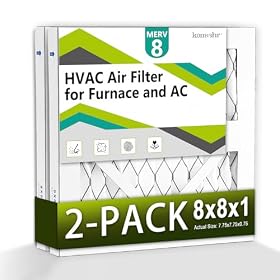
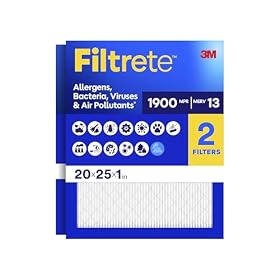
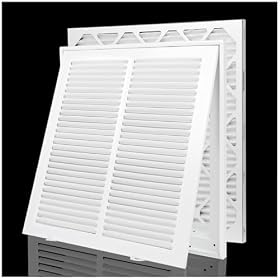
The best 1-inch furnace filter is the one that fits correctly, captures the particles you care about, and does not restrict airflow beyond what your HVAC system can handle. Use the existing filter’s actual dimensions and choose the highest practical MERV rating your system supports.
A good 1-inch furnace filter should fit the filter slot without bending, bypass gaps, or excessive resistance to airflow. For many homes, a pleated MERV 8 filter is a sensible starting point. MERV 11 or MERV 13 can provide finer filtration, but only if the furnace or air handler is designed to handle the added pressure drop.
Quick recommendation
For most standard residential systems:
Choose a 1-inch pleated filter rather than a thin fiberglass panel when better dust and pollen capture is needed.
Match the filter’s actual dimensions to the old filter or the size printed on the system’s filter slot.
Use MERV 8 as a conservative general-purpose choice when the HVAC manufacturer gives no higher-rating guidance.
Consider MERV 11 or MERV 13 only when the system manufacturer or an HVAC professional confirms that airflow will remain adequate.
Replace the filter when it is visibly loaded, or follow a regular schedule based on the home’s dust, pets, smoke, and runtime.
There is no single best MERV rating for every furnace. A filter that captures more particles can also create more airflow resistance, especially when it becomes dirty.
What to look for in a 1-inch furnace filter
Correct size
Filter sizes are commonly described by nominal dimensions, such as 16 by 25 by 1 inches. The filter’s actual measured dimensions may be slightly smaller so it can slide into the rack. Do not assume that two filters with the same printed size will have exactly the same actual dimensions.
Before ordering, check:
The length, width, and thickness printed on the old filter.
The direction-of-airflow arrow.
Whether the filter sits at the return grille, inside the furnace, or in a separate cabinet.
The available depth. A 1-inch slot should not be forced to accept a thicker filter.
If the old filter has no readable label, measure the filter and the opening. A loose fit can allow unfiltered air around the filter, while an oversized filter can buckle or prevent the access panel from closing.
Pleated construction
Pleated filters have more usable surface area than flat fiberglass filters of the same nominal thickness. That generally allows better particle capture, but pleat count alone does not determine performance. The filter’s MERV rating, media design, pressure drop, and fit all matter.
A filter should remain rigid enough to avoid collapsing or bowing into the airflow path. If the filter visibly flexes, check that it is installed in the correct direction and that the filter rack supports it properly.
MERV rating
MERV, or Minimum Efficiency Reporting Value, indicates how effectively a filter captures particles in standardized size ranges. A higher MERV rating generally means finer filtration, but it does not automatically mean the filter is the right choice for a 1-inch system.
Use the following as a practical guide:
MERV 8: A common general-purpose option for household dust, pollen, and larger airborne particles.
MERV 11: A possible upgrade for homes that want improved capture of smaller particles, provided the system supports it.
MERV 13: A higher-filtration option that may help capture more fine airborne particles, but it can create more resistance in some 1-inch filter systems.
The filter packaging may list performance claims for dust, pollen, smoke, or other particle categories. Compare those claims with the HVAC manufacturer’s requirements rather than choosing solely by the highest number.
Product prices and availability are accurate as of the date/time indicated and are subject to change. Any price and availability information displayed on Amazon.com at the time of purchase will apply to the purchase of this product.
Is MERV 13 too restrictive for a 1-inch filter?
It can be. A 1-inch MERV 13 filter may restrict airflow more than a lower-rated filter, especially as dust accumulates. Whether it is acceptable depends on the furnace or air handler, blower settings, filter rack, ductwork, and the filter’s specific pressure-drop characteristics.
Look for the equipment manufacturer’s approved filter rating or maximum pressure-drop guidance. If that information is unavailable, ask an HVAC professional to verify airflow and system operation before making a high-MERV filter a permanent choice.
Warning signs of excessive restriction can include weak airflow from registers, unusual blower noise, short cycling, difficulty maintaining the thermostat setting, or a filter that bows inward. These symptoms can have other causes, so do not assume the filter is the only problem.
Product prices and availability are accurate as of the date/time indicated and are subject to change. Any price and availability information displayed on Amazon.com at the time of purchase will apply to the purchase of this product.
Choosing the best 1-inch filter for your home
For a typical home with normal dust
A quality pleated MERV 8 filter is often the most conservative starting point. It provides more useful filtration than a basic flat panel while placing less airflow burden on the system than many higher-MERV options.
For pets or heavier household dust
Start with a pleated filter at the rating recommended by the HVAC manufacturer. Pet hair is often caught at the filter surface, but a filter is not a substitute for cleaning return grilles, vacuuming, or controlling dust at its source. Check the filter more frequently because visible loading can increase airflow resistance.
For allergies or fine-particle concerns
A higher MERV rating may improve capture of some smaller airborne particles, but the HVAC system must be able to move air through the filter. If a 1-inch MERV 11 or MERV 13 filter causes airflow problems, an HVAC professional may recommend a larger media cabinet or another filtration arrangement instead of simply forcing a more restrictive filter into the existing slot.
For smoke or fine airborne particles
Fine-particle filtration requires careful attention to both efficiency and airflow. A high-MERV 1-inch filter may not be the best long-term solution if the system cannot maintain proper airflow. Follow the furnace manufacturer’s guidance, and consider professional advice for persistent smoke exposure or indoor-air-quality problems.
Product prices and availability are accurate as of the date/time indicated and are subject to change. Any price and availability information displayed on Amazon.com at the time of purchase will apply to the purchase of this product.
How often should a 1-inch furnace filter be replaced?
A 1-inch filter commonly needs more frequent replacement than a deeper filter because it has less media area to hold captured dust. The right interval depends on filter efficiency, system runtime, pets, construction activity, smoking, outdoor air quality, and household occupancy.
Check the filter at least monthly when trying a new replacement schedule. Replace it when the media is visibly loaded or according to the manufacturer’s interval. Homes with pets, allergies, renovations, or frequent heating and cooling may need more frequent changes.
Do not wash a disposable pleated filter unless its manufacturer specifically identifies it as washable. Washing the wrong filter can damage the media and reduce filtration.
Product prices and availability are accurate as of the date/time indicated and are subject to change. Any price and availability information displayed on Amazon.com at the time of purchase will apply to the purchase of this product.
Installation mistakes that reduce performance
Installing the filter backward: Point the arrow toward the furnace or air handler, in the direction of airflow.
Using the wrong thickness: A thicker filter may not fit the rack or may restrict airflow.
Leaving gaps: Oversized openings around the filter allow air to bypass the filter.
Ignoring the return grille: Some systems use a filter at the grille rather than at the furnace. Installing an extra filter can create unnecessary resistance unless the system is designed for it.
Failing to reset the reminder: After replacement, reset the thermostat or filter reminder if the system has one.
Turn off the HVAC system before removing a difficult-to-access filter, and follow the equipment manual. Do not reach into moving equipment or work on electrical components. If the filter rack is damaged, the blower behaves abnormally, or airflow remains poor with a clean, correctly sized filter, contact a qualified HVAC professional.
Bottom line
The best 1-inch furnace filter is usually a correctly fitted pleated filter with the highest MERV rating your system can support without harmful airflow restriction. For many homes, MERV 8 is a practical baseline; MERV 11 or MERV 13 may be appropriate when the equipment manufacturer permits them. Confirm the actual size, install the airflow arrow correctly, inspect the filter regularly, and avoid choosing a rating based on filtration claims alone.
FAQ
What is the best MERV rating for a 1-inch furnace filter?
MERV 8 is a conservative general-purpose starting point for many residential systems. MERV 11 or MERV 13 may provide finer filtration, but use them only when the furnace or air handler manufacturer indicates that the system can handle the added airflow resistance.
Can I use a MERV 13 filter in a 1-inch furnace?
Possibly, but not universally. A 1-inch MERV 13 filter can restrict airflow more than a lower-rated filter, particularly when dirty. Check the equipment documentation or have an HVAC professional verify that the filter is suitable.
How do I know what 1-inch furnace filter size to buy?
Read the size printed on the existing filter and compare it with the filter slot. If the label is missing, measure the old filter and opening. Match the length, width, and thickness, and allow for the small difference between nominal and actual dimensions.
Which way does a furnace filter go?
The arrow on the filter should point in the direction of airflow—usually toward the furnace or air handler. Installing it backward can reduce its intended performance and may cause the filter media to flex.