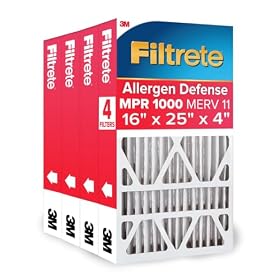
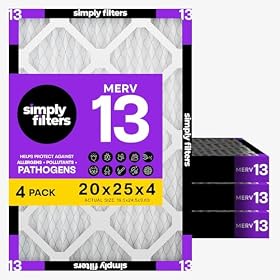
The best 4-inch media filter is the one that fits your cabinet exactly, provides the needed filtration, and does not add more airflow resistance than your HVAC system can handle.
A 4-inch media filter is usually a better long-term choice than a thin 1-inch filter because its deeper pleats provide more surface area for capturing particles. The best option is not automatically the highest-MERV filter, though. Choose the correct nominal size first, then select the highest filtration level your furnace or air handler is designed to support without restricting airflow.
Best 4-inch media filter by use case
Best for most homes: a pleated MERV 8 filter
A quality 4-inch pleated filter with a MERV 8 rating is a practical starting point for many homes. It captures common household dust, lint, and larger airborne particles while generally offering less airflow resistance than denser filters.
Choose this level when:
No one in the home has specific filtration needs
The HVAC system is older or airflow is already weak
You want a lower-resistance replacement filter
The manufacturer recommends MERV 8 or a similar rating
Best for improved particle filtration: MERV 11
MERV 11 is often a useful middle ground for homes that want better capture of smaller particles than MERV 8 provides. It may be appropriate for homes with pets, more dust, or occupants who want stronger general filtration.
Before moving up to MERV 11, confirm that the furnace, air handler, and filter cabinet can handle it. A deeper filter helps, but filter resistance still varies by brand, construction, dust loading, and airflow rate.
Best for higher filtration: MERV 13, when the system supports it
MERV 13 can capture a greater share of smaller airborne particles, but it should not be treated as a universal upgrade. Some HVAC systems are not designed for the added resistance, particularly when the filter is dirty or the blower is already operating near its limit.
Use MERV 13 only when the HVAC manufacturer, installer, or qualified technician confirms that the system can maintain adequate airflow. If the system struggles after installation, return to the recommended rating rather than leaving a restrictive filter in place.
What to check before buying
1. Match the nominal filter size
Read the size printed on the existing filter or the filter cabinet. A listing may use nominal dimensions such as 16 by 25 by 4 inches, while the filter's actual dimensions are slightly different.
The replacement must fit the cabinet's opening and seal properly. Do not rely only on measurements from memory or assume that every filter labeled with the same nominal size has identical actual dimensions. Check the manufacturer's published dimensions when fit is close.
2. Confirm the filter depth
“4-inch” filters are sold in several actual depths depending on the cabinet and manufacturer. A filter that is too deep may not slide into the housing, while one that is too shallow can leave bypass gaps around the frame.
Measure the old filter if the cabinet label is missing. Also check the direction-of-airflow arrow before installation.
3. Choose MERV based on the HVAC system
MERV is a filtration-efficiency rating, not a complete measure of filter quality. A higher MERV rating generally indicates better capture of smaller particles, but it can also increase resistance to airflow.
Follow this order:
Check the furnace or air-handler manual.
Look for the HVAC manufacturer's recommended maximum MERV rating.
Check whether the filter cabinet is designed for a deep media filter.
If the recommended rating is unclear, ask an HVAC professional before moving to a substantially higher MERV level.
A high-MERV filter is not beneficial if it causes inadequate airflow, coil icing, overheating, noisy operation, or poor temperature control.
4. Look for a rigid, well-sealed frame
The filter frame should remain square when inserted. A warped or crushed frame can create gaps that allow air to bypass the filter. Some cabinets use a gasket or compression fit; others depend on a door or retaining mechanism to hold the filter firmly in place.
The filter should slide in without forcing it. Do not bend the media or crush the frame to make an incompatible filter fit.
5. Compare replacement availability
A filter that is easy to find in the correct size is usually more practical than a harder-to-source option with a slightly higher rating. Check whether the filter is sold individually or in a multipack, and verify that every replacement has the same size and MERV rating.
Do not extend the replacement interval simply because a filter is deeper. The correct interval depends on household dust, pets, construction activity, system runtime, and the filter manufacturer's guidance.
Product prices and availability are accurate as of the date/time indicated and are subject to change. Any price and availability information displayed on Amazon.com at the time of purchase will apply to the purchase of this product.
How a 4-inch filter affects airflow
A deeper filter has more pleated surface area than a thin filter of the same face size. That can allow the filter to collect more dust before becoming excessively loaded, but it does not guarantee low resistance. Pleat design, media density, airflow volume, and dust buildup all matter.
Warning signs of excessive airflow restriction include:
Weak airflow from supply registers
Unusual whistling or air-rushing sounds at the filter
Longer heating or cooling cycles
Furnace overheating or frequent limit trips
A heat pump or air conditioner coil icing over
Rooms that no longer reach the thermostat setting
Turn off the HVAC system and inspect the filter if airflow changes suddenly. If the filter is clean and the symptoms continue, contact an HVAC professional rather than removing the filter permanently or installing a much higher-rated filter as a substitute for diagnosis.
Product prices and availability are accurate as of the date/time indicated and are subject to change. Any price and availability information displayed on Amazon.com at the time of purchase will apply to the purchase of this product.
Installation and replacement tips
Turn off the furnace or air handler before changing the filter.
Remove the old filter and note the airflow arrow.
Inspect the cabinet for loose debris, gaps, or a damaged retaining piece.
Install the new filter with the arrow pointing toward the furnace, air handler, or blower.
Make sure the filter sits flat and the access door closes completely.
Restore power and listen for unusual airflow noise.
Write the installation date on the filter or set a calendar reminder.
The filter should not rattle, bow, or slide loosely in the cabinet. If it does, verify the actual dimensions and cabinet requirements before operating the system for an extended period.
Product prices and availability are accurate as of the date/time indicated and are subject to change. Any price and availability information displayed on Amazon.com at the time of purchase will apply to the purchase of this product.
When to choose a different filter
Choose a lower MERV rating if the system manufacturer specifies one, airflow is weak, or a higher-rated filter causes operating problems. Choose a higher rating only when the HVAC system supports it and the household has a clear reason to want additional particle filtration.
If a household member has medical or allergy-related filtration needs, consult a healthcare professional for health advice and an HVAC professional for system compatibility. A portable room air cleaner may sometimes provide targeted particle reduction without placing the same resistance on the central HVAC system.
When to replace the filter cabinet instead
A replacement filter is not the solution if the cabinet is badly damaged, cannot hold the filter tightly, or has persistent bypass gaps. A qualified HVAC contractor can determine whether the cabinet, blower setup, ductwork, or filter size needs correction.
Replace the filter rather than cleaning and reusing it unless the manufacturer specifically identifies it as washable. Most disposable pleated media filters are not designed to be washed.
FAQ
Is a 4-inch furnace filter better than a 1-inch filter?
Often, yes. A 4-inch filter has more media surface area and can typically hold more dust before loading up. It is only an improvement when it fits the cabinet correctly and matches the HVAC system's airflow and filtration requirements.
What MERV rating should I use in a 4-inch filter?
Use the rating recommended by the furnace or air-handler manufacturer. MERV 8 is a common general-purpose choice, while MERV 11 or MERV 13 may provide higher particle filtration if the system is designed to handle the added resistance.
Can I use a MERV 13 filter in any 4-inch filter cabinet?
No. Filter depth alone does not prove that the HVAC system can support MERV 13. Check the equipment documentation or ask a qualified HVAC professional before upgrading.
How often should a 4-inch media filter be changed?
Follow the filter manufacturer's guidance, then adjust based on dust, pets, construction, and system runtime. Inspect the filter regularly and replace it when visibly loaded or when airflow begins to decline.
Why does my new 4-inch filter whistle?
The filter may be too restrictive, installed incorrectly, the wrong actual size, or surrounded by a cabinet gap that causes air leakage. Turn off the system, check the airflow arrow and fit, and contact an HVAC professional if the noise continues.