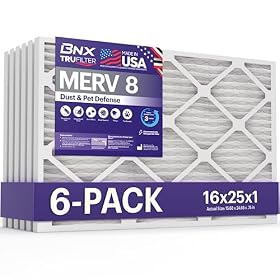
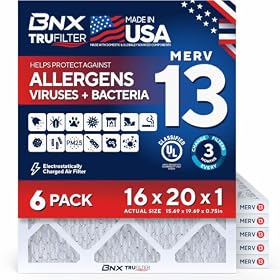
The best filter for a variable-speed blower is not automatically the highest-MERV filter. Choose the correct size and thickness, then select the lowest-pressure-drop filter that provides the level of particle removal your home needs.
A variable-speed blower can adjust its airflow, but it does not make every restrictive furnace filter a good choice. The best filter is the correct physical size and thickness, with a published pressure-drop rating low enough for your HVAC system. For many homes, a quality pleated MERV 8 to MERV 11 filter is a sensible starting point; MERV 13 can be appropriate when the system and filter cabinet are designed to handle it.
What to look for in a filter
1. The exact size
Start with the filter dimensions printed on the existing filter or the filter cabinet. Check:
Length and width
Actual thickness, especially for 4- or 5-inch media filters
Airflow arrow orientation
Whether the filter is installed at the return grille or inside the furnace cabinet
A filter that is too small can allow air to bypass the media. A filter that is too thick may not fit correctly or may restrict airflow if the cabinet was not designed for it. Do not substitute a nominal size based only on a similar-looking filter.
2. A pleated design
A pleated filter generally provides more usable filter surface than a flat fiberglass filter. The added surface area can improve particle capture without requiring the filter media itself to be excessively dense.
Look for a rigid frame and pleats that remain supported during operation. A collapsed or bowed filter can leak air around the edges and reduce performance.
3. A suitable MERV rating
MERV describes how effectively a filter captures particles in standardized tests. A higher MERV rating usually means finer filtration, but it can also increase airflow resistance. The actual pressure drop depends on the filter's construction, size, thickness, airflow rate, and condition—not just its MERV number.
As a general guide:
MERV 8: Often a reasonable basic choice for dust and common household particles.
MERV 11: A step up in filtration for homes that want improved capture of smaller particles, provided the system can maintain adequate airflow.
MERV 13: Useful when finer particle filtration is a priority, but it should be selected only when the HVAC manufacturer, contractor, or filter pressure-drop data supports it.
A variable-speed motor may compensate for some changes in airflow demand, but it still has operating limits. It may run faster, consume more electricity, create more noise, or fail to deliver the intended airflow if the filter is too restrictive.
4. Low pressure drop at your system's airflow
Pressure drop is often more useful than MERV alone when comparing filters. It indicates how much resistance the filter adds as air passes through it. When available, compare pressure-drop data at similar airflow rates and for filters of the same size.
A larger, thicker media filter often has more surface area and may offer lower resistance than a 1-inch filter with the same MERV rating. This is not guaranteed, so use the manufacturer's published data rather than assuming that every 4- or 5-inch filter will perform better.
Is MERV 13 safe with a variable-speed blower?
Sometimes, but variable-speed operation by itself is not proof that MERV 13 is suitable. The complete system matters, including the blower, coil, ductwork, return grille, filter cabinet, and design airflow.
Before moving to MERV 13, check the HVAC owner's manual or ask a qualified HVAC professional to verify the system's allowable pressure drop and airflow requirements. If the system already has weak return airflow, undersized ducts, a dirty coil, or a restrictive filter grille, a high-MERV filter may worsen the problem.
A deeper media cabinet can make higher filtration easier to accommodate because it can provide more filter area. If the system uses only a narrow 1-inch slot, compare the filter's pressure-drop information carefully instead of choosing solely by the MERV label.
Low-resistance pleated filters for variable-speed HVAC systems
Product prices and availability are accurate as of the date/time indicated and are subject to change. Any price and availability information displayed on Amazon.com at the time of purchase will apply to the purchase of this product.
The best choice by situation
For normal dust control
Choose a well-fitting pleated filter with a moderate MERV rating and low published pressure drop. MERV 8 or MERV 11 may be appropriate depending on the home's needs and the HVAC manufacturer's guidance.
For allergies or finer particle filtration
Consider MERV 11 or MERV 13, but prioritize system compatibility. A filter that captures more particles on paper is not a good upgrade if it causes insufficient airflow, icing, overheating, or excessive blower noise.
For smoke or very fine particles
A higher-MERV filter may help capture more fine particles, but a central HVAC filter is not a substitute for source control, ventilation, or a properly sized portable air cleaner. During heavy smoke conditions, follow local air-quality guidance and avoid making an unverified filter change that could damage or impair the HVAC system.
For a 1-inch filter slot
Be especially cautious with high-MERV filters. The shallow filter has limited surface area, so resistance can rise quickly as the filter loads with dust. A lower-resistance filter changed on schedule may be better than a highly restrictive filter left in service too long.
For a 4- or 5-inch media cabinet
A deep filter can provide more media area and may be a better platform for higher filtration. Confirm the cabinet's required dimensions and use a filter specified for that cabinet. Do not force a thicker filter into a shallow housing.
Product prices and availability are accurate as of the date/time indicated and are subject to change. Any price and availability information displayed on Amazon.com at the time of purchase will apply to the purchase of this product.
Check the system after installing a new filter
After replacing the filter, confirm that:
The arrow points toward the furnace or air handler.
The filter sits squarely without large gaps around the frame.
The blower does not become unusually loud.
Supply airflow has not noticeably weakened.
The furnace does not cycle off early or show a high-limit fault.
The indoor coil does not ice during cooling operation.
These symptoms can have causes unrelated to the filter, including blocked returns, dirty coils, duct restrictions, refrigerant problems, or blower faults. Turn off the equipment and contact a qualified HVAC professional if the system overheats, repeatedly shuts down, develops ice, or produces unusual electrical or burning odors.
How often should you replace the filter?
Replace the filter according to the manufacturer's guidance and inspect it sooner if the home has pets, renovation dust, wildfire smoke, or unusually heavy occupancy. A dirty filter creates more resistance than a clean filter of the same type.
Do not rely only on a calendar interval. If the media is visibly loaded with dust or airflow has declined, replacement may be due earlier. Never wash a disposable filter unless its manufacturer specifically identifies it as washable.
Bottom line
For a variable-speed blower, the best furnace filter is a properly fitted pleated filter with the lowest practical pressure drop for the filtration level you need. MERV 8 to MERV 11 is often a reasonable range for general residential use, while MERV 13 should be chosen only after confirming compatibility. Filter thickness, available surface area, published pressure-drop data, and the condition of the entire return-air system matter more than the MERV number alone.
FAQ
Does a variable-speed blower allow me to use any MERV 13 filter?
No. A variable-speed blower can adjust its speed, but it still needs adequate airflow and has operating limits. Confirm the HVAC manufacturer's requirements and compare the filter's pressure drop before using MERV 13.
What MERV rating is usually appropriate for a variable-speed furnace?
MERV 8 to MERV 11 is often a practical range for general home filtration, but the correct choice depends on the system and household needs. MERV 13 may be suitable when the equipment and filter cabinet support its pressure drop.
Is a thicker filter better for a variable-speed blower?
A deeper filter often has more media area and may create less resistance than a 1-inch filter with a similar MERV rating. It is not automatically better, however; it must fit the cabinet and its pressure-drop data should be checked.
What should I do if the furnace gets noisy after installing a higher-MERV filter?
Turn off the system and verify the filter size, orientation, seating, and return-air openings. Reinstall the previous filter if appropriate and contact an HVAC professional if noise, weak airflow, overheating, repeated shutdowns, or coil icing continues.