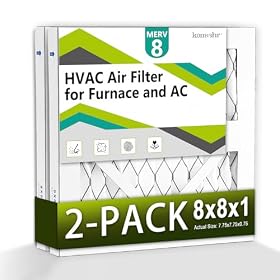
Filter for a Heat Pump Air Handler: Size, MERV, and Fit
A heat pump air handler generally uses a standard HVAC filter, not a special heat-pump filter. Match the size and thickness to the equipment, then choose a MERV rating the manufacturer allows.
Filter for a heat pump air handler
A heat pump air handler usually takes a standard HVAC filter. The right one must fit the filter rack or return grille and let enough air pass through the system. Match the size and thickness first; choose a MERV rating only after checking the air handler’s instructions or asking an HVAC professional what the system can handle.
Find where the filter goes and confirm its size
The filter is usually in a slot at the air handler or behind a return-air grille. Follow the return-air path; a filter normally belongs on the return side, before air reaches the blower. Some systems have more than one return grille, so check the equipment instructions to determine how many filters the system uses.
Read the size printed on the old filter and confirm that it matches the slot or grille. If the label is missing, measure the opening and check the equipment documentation. Filter sizes are commonly listed as nominal dimensions, which may differ slightly from the filter’s actual measurements. Buy the size specified for the filter rack—not a size that merely seems close.
Also match the filter’s thickness. A one-inch filter and a thicker media filter are not interchangeable unless the rack is designed for both. Don’t add a second filter at a return grille if the air handler already has one, unless the system was specifically designed for filters in both locations. Extra or poorly fitting filters can restrict airflow or let air bypass the filter.
Choose a MERV rating the system allows
MERV indicates how effectively a filter captures particles. A higher rating can capture smaller particles, but a denser filter may also increase resistance to airflow. The result depends on the filter’s design, size, thickness, and the air handler’s capacity—not just the MERV number.
Start with the air handler manual, the label on the filter rack, or guidance from the installer. If those sources specify a maximum MERV rating, follow it. If they don’t, ask an HVAC professional before moving to a higher-resistance filter. A higher MERV rating is not automatically an upgrade if it reduces the airflow the system needs.
A thicker media filter can provide more filter area than a thin filter in some setups, but it must fit a compatible cabinet. Never force a thicker filter into a one-inch slot or modify the air handler to accommodate one.
Product prices and availability are accurate as of the date/time indicated and are subject to change. Any price and availability information displayed on Amazon.com at the time of purchase will apply to the purchase of this product.
Install it in the correct direction
Look for an airflow arrow on the filter frame. Point the arrow toward the air handler or blower, following the airflow direction through the return duct. Slide the filter into its slot without bending it, and check that it sits snugly with no gaps around the edges. A filter that bows, falls out, or leaves large gaps may be the wrong size or installed incorrectly.
Replace the filter according to its label and the equipment manufacturer’s guidance. Check it sooner if the home is dusty, has pets, or the system runs frequently. A dirty filter should be replaced; washing a disposable filter can damage it or make it ineffective.
Product prices and availability are accurate as of the date/time indicated and are subject to change. Any price and availability information displayed on Amazon.com at the time of purchase will apply to the purchase of this product.
Check for airflow problems after changing filters
If airflow becomes noticeably weaker, the system sounds different, or the air handler runs unusually long after a filter change, check these items:
Filter condition and rating: Confirm the filter is clean, undamaged, and within the rating allowed for the system.
Fit and direction: Make sure the filter is the correct size, seated fully, and facing the right direction.
Other return-air restrictions: Check that return grilles are not blocked by furniture, curtains, or debris.
System symptoms: If airflow remains poor, or the heat pump develops persistent operating problems, contact an HVAC professional. Don’t remove a filter as a workaround for ongoing airflow trouble; the cause may be elsewhere in the system.
If the filter rack is damaged, won’t hold the specified size, or allows air to bypass the filter, have it repaired or replaced. If you cannot confirm which filter size or MERV rating is permitted, the air handler manual or a qualified HVAC professional is the safest guide.
FAQ
Does a heat pump air handler need a special filter?
Usually not. It generally uses a standard HVAC filter sized for its filter rack or return grille. Check the equipment instructions for the required size, thickness, and allowed MERV rating.
Can I use a MERV 13 filter in a heat pump air handler?
Only if the air handler and filter setup are designed to handle it. Check the manual or ask an HVAC professional; a higher-resistance filter can reduce airflow in some systems.
Which way does the filter arrow point?
Point the arrow toward the air handler or blower, in the direction air moves from the return grille into the equipment.
Can I put filters at both the return grille and the air handler?
Do so only if the system was designed for filters in both locations. An extra filter can add airflow resistance.