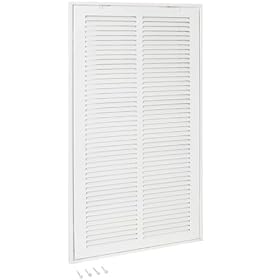
The best filter for a small condo air handler is the correctly sized filter with the highest practical MERV rating your system can handle without restricting airflow. For many compact systems, a quality pleated MERV 8 to MERV 11 filter is a sensible starting point, while MERV 13 may require specific equipment approval.
A pleated filter that matches your air handler’s exact size and recommended MERV range is usually the best choice for a small condo. In many compact systems, MERV 8 to MERV 11 provides useful dust and pollen filtration without imposing as much airflow resistance as a high-efficiency filter. MERV 13 can improve capture of finer particles, but only use it when the air-handler manufacturer or HVAC professional confirms that the system can handle it.
What to look for first
1. Match the filter’s actual size
Do not choose a filter based only on a size remembered from a previous purchase. Check the dimensions printed on the existing filter and compare them with the filter slot, filter grille, or air-handler label.
Filters often have a nominal size printed on the package and a slightly different actual size. The replacement must fit securely without being forced into the rack or leaving large gaps around the edges.
Check:
Length and width
Filter thickness, such as a shallow one-inch filter or a deeper media filter
Airflow arrow on the frame
Whether the filter loads at the return grille or inside the air handler
Whether the filter is designed for a reusable grille or a dedicated cabinet
If the filter bows, rattles, slides around, or leaves visible bypass gaps, it is not a good fit even if the nominal size appears correct.
2. Choose a practical MERV rating
MERV measures how effectively a filter captures particles of different sizes. A higher MERV rating generally means finer filtration, but it may also create more resistance to airflow—especially in a thin filter.
For a small condo air handler:
MERV 8: Often a reasonable basic option for dust, lint, and larger airborne particles.
MERV 11: A useful middle ground for improved filtration of smaller particles when the system permits it.
MERV 13: More effective for fine particles, but it can be too restrictive for some compact air handlers, older equipment, or systems with undersized return grilles.
The highest MERV number is not automatically the best choice. Restricted airflow can reduce comfort, increase operating strain, cause coil icing in cooling mode, and make the system run longer. Follow the air-handler manufacturer’s instructions if they specify a maximum filter rating.
Best default for many small condo systems
A correctly sized pleated MERV 8 or MERV 11 filter is often the safest general starting point for a small condo air handler. Select the deeper filter available only if the equipment is designed for it; do not try to fit a thicker filter into a shallow slot.
A thicker media filter can sometimes provide more filtering area and lower resistance than a thin high-MERV filter, but the air handler, cabinet, and filter rack must be designed for that depth. A deeper filter is not an interchangeable upgrade.
If someone in the home has significant allergies, asthma, or sensitivity to fine particles, ask an HVAC professional whether the system can support MERV 11 or MERV 13. Improving filtration may also require better return airflow, a properly sealed filter rack, or a compatible higher-capacity cabinet.
Product prices and availability are accurate as of the date/time indicated and are subject to change. Any price and availability information displayed on Amazon.com at the time of purchase will apply to the purchase of this product.
Filter types and when they make sense
Pleated disposable filters
Pleated filters are the usual choice for residential air handlers. Their folded media provides more surface area than a flat panel filter. Choose a filter with a rigid frame that fits the rack and a MERV rating appropriate for the equipment.
Avoid treating a washable filter as a direct replacement unless the manufacturer specifically approves it. Washable filters can have different airflow and filtration characteristics, and they must be completely dry before installation.
Filter-grille filters
Some condo systems use a filter in a return-air grille rather than at the air handler. In this setup, the grille’s depth and filter dimensions matter. A filter that is too thick can prevent the grille from closing or reduce return airflow.
If there are multiple return grilles, confirm whether each one needs a filter. Do not add extra filters at different points unless the system design calls for them; unnecessary layers can increase resistance.
MERV 13 filters
MERV 13 is worth considering only when the equipment and return-air path can support it. A MERV 13 filter in a thin, restrictive format may perform worse for the whole system than a lower-MERV filter that allows the blower to maintain proper airflow.
Ask for professional guidance if you notice weak airflow, unusual blower noise, longer heating or cooling cycles, coil icing, or a filter that collapses inward after installing a higher-MERV option.
Product prices and availability are accurate as of the date/time indicated and are subject to change. Any price and availability information displayed on Amazon.com at the time of purchase will apply to the purchase of this product.
How to know whether the filter is too restrictive
After installing a new filter, watch for changes such as:
Noticeably weaker airflow at supply vents
New whistling or wheezing around the return grille
Longer cycles or difficulty reaching the thermostat setting
Ice on the indoor coil or refrigerant line during cooling
A filter that bows or becomes visibly sucked inward
The blower sounding strained or unusually loud
These symptoms can have other causes, including a dirty coil, blocked return, closed vents, duct problems, or a failing blower. Turn off the system and seek HVAC service if ice forms, airflow becomes very weak, or the equipment repeatedly shuts down.
Product prices and availability are accurate as of the date/time indicated and are subject to change. Any price and availability information displayed on Amazon.com at the time of purchase will apply to the purchase of this product.
How often should a condo air-handler filter be replaced?
Replacement timing depends on filter depth, household conditions, pets, renovation dust, and how often the system runs. Inspect the filter regularly rather than relying only on a calendar. Replace it when the media is visibly loaded with dust or when the manufacturer’s interval has been reached.
A small system in a condo may run frequently because of limited space, shared building conditions, or a high cooling load. Homes with pets, smokers, construction dust, or occupants with allergies may need more frequent replacement.
Never operate the air handler without the required filter. A missing filter allows dust onto the blower and indoor coil, where it can reduce performance and lead to expensive cleaning or service.
Installation checklist
Turn the system off if the filter is located inside the air-handler cabinet.
Remove the old filter without shaking accumulated dust into the return opening.
Confirm the replacement dimensions and thickness.
Point the airflow arrow toward the air handler or blower, not toward the room.
Make sure the filter sits flat and seals reasonably around the frame.
Close the grille or cabinet securely.
Restore power and listen for unusual airflow noise.
Mark the installation date on the filter frame or calendar.
For a filter in an electrical or mechanical cabinet, do not remove panels beyond what the manufacturer identifies as user-accessible. Turn off power at the appropriate disconnect before servicing equipment, and use a qualified HVAC technician for wiring, blower, refrigerant, or control-panel work.
When to choose a different solution
A replacement filter is reasonable when the current filter is dirty, damaged, incorrectly sized, or overdue for replacement. Consider an HVAC professional instead when:
The filter size is missing or the rack does not hold it securely
Several filters seem to be required but the airflow is poor
A higher-MERV filter causes a major airflow change
The system freezes, overheats, trips a limit, or makes new noises
The return grille or filter cabinet is visibly leaking air around the filter
You want MERV 13 filtration but the equipment documentation does not address it
If the filter rack is badly damaged or the system consistently cannot maintain airflow with an appropriate filter, repairing or replacing the rack may be more sensible than repeatedly trying different filter ratings.
FAQ
What MERV rating is best for a small condo air handler?
MERV 8 to MERV 11 is often a practical range for compact residential systems, provided the filter matches the equipment’s requirements. MERV 13 may be appropriate for some systems, but confirm that the air handler and return-air path can support it.
Can a MERV 13 filter damage a small air handler?
A filter does not automatically damage equipment because it is MERV 13, but a restrictive filter can reduce airflow. That may contribute to poor comfort, longer cycles, coil icing, or blower strain. Follow the manufacturer’s guidance and have airflow checked if symptoms appear.
Should I use a one-inch or thicker filter?
Use the thickness specified by the filter rack or air-handler cabinet. A thicker filter can provide more media area, but it will not fit correctly in a shallow slot and should not be forced into place.
How do I find the correct condo air-handler filter size?
Read the dimensions printed on the old filter, then verify the length, width, and thickness against the filter slot or grille. If the old filter was loose or difficult to remove, measure the opening and consult the equipment or grille manufacturer.
Which way does the filter arrow point?
The arrow should point in the direction of airflow—toward the air handler, blower, or indoor coil. In a return grille, this usually means the arrow points away from the room and into the return opening.