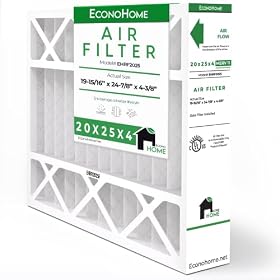
A year's supply of furnace filters is only a good value when every filter fits correctly and matches your system's airflow needs. Here's how to confirm size, choose MERV, calculate quantity, and store replacements safely.
What do you need help with?
Open an answer, or tell us what we should cover next.
Answered in this guide
Choose a furnace filter that balances clean air and airflow
Choose a MERV rating your furnace can handle. Higher ratings may capture more particles, but denser filters can restrict airflow, so the best choice balances filtration needs with the system’s airflow limits.
Confirm the furnace filter size before buying in bulk
Read the nominal size printed on the existing filter frame and confirm the replacement has the same length, width, and thickness. Do this before ordering a year’s supply to avoid buying filters that do not fit.
Compare packs only after confirming they contain the same size, thickness, MERV rating, construction, airflow direction, and quantity. Then compare the cost of the filters you can actually use, not just the advertised pack price.
Keep unused filters in their original packaging in a clean, dry indoor location. Store them flat or as the manufacturer recommends, and avoid placing heavy objects on top of them.
Request a topic and help us choose what to build next.
Install a replacement filter in the correct direction
Diagnose poor airflow after changing the furnace filter
Set a filter-change reminder for the home
Requests help us prioritize the next guide. No email required.
One anonymous request per topic.
Buy a year's worth of furnace filters only after confirming the filter's actual size, nominal size, thickness, airflow rating, and replacement schedule. The cheapest bulk pack is not a bargain if the filters do not fit, restrict airflow, or sit in storage long enough to collect moisture and dust.
Confirm the filter size before buying in bulk
Start with the size printed on the existing filter frame. Furnace filter sizes are commonly listed as nominal dimensions, such as 16 x 25 x 1, while the actual filter may measure slightly differently. Use the printed size when ordering a replacement, but measure the opening if the label is missing or questionable.
Check these dimensions:
Length and width: The filter should slide into the slot without bending or leaving large gaps.
Thickness: A 1-inch filter is not interchangeable with a 4-inch media filter unless the housing is designed for it.
Airflow direction: Follow the arrow printed on the filter. It should point toward the furnace, air handler, or blower.
Filter location: Some systems have a filter at the return grille, while others use a filter cabinet near the equipment. Do not assume both locations use the same size.
A loose filter can allow unfiltered air around its edges. A filter that is too large can buckle, block the slot, or make removal difficult. If the existing filter size seems wrong, confirm the replacement dimensions with the furnace, air-handler, or filter-housing manual before purchasing a full pack.
Choose a MERV rating your system can handle
MERV describes how effectively a filter captures particles. Higher MERV ratings can improve filtration, but a denser filter may also increase resistance to airflow. The correct choice depends on the equipment, filter thickness, return-air design, and the condition of the duct system—not just the rating printed on the box.
Use the equipment manufacturer’s guidance as the starting point. If the system specifies a maximum MERV rating, do not exceed it without advice from a qualified HVAC professional. This is especially important for older furnaces, systems with weak return airflow, and setups that already have airflow problems.
Watch for symptoms of excessive restriction after installing a denser filter:
Reduced airflow from supply registers
Longer heating or cooling cycles
Unusual blower noise
A filter that bows inward while the system runs
Poor temperature balance between rooms
A furnace that overheats or shuts down repeatedly
A clean, properly sized filter with a moderate MERV rating is generally preferable to an overly restrictive filter that the system cannot move air through. If you need better particle filtration, a deeper filter cabinet may provide more filter area than simply choosing a denser 1-inch filter. That change should be evaluated for compatibility with the equipment and cabinet.
Product prices and availability are accurate as of the date/time indicated and are subject to change. Any price and availability information displayed on Amazon.com at the time of purchase will apply to the purchase of this product.
Calculate how many filters you actually need
Do not automatically buy 12 filters because a year has 12 months. Replacement intervals vary with filter thickness, home conditions, pets, construction dust, wildfire smoke, indoor air quality needs, and how often the HVAC system runs.
Use your current replacement interval as the basis:
Determine how often the filter needs inspection or replacement.
Multiply that interval across the heating and cooling seasons.
Add one spare filter for an unexpected dirty filter or a missed replacement.
Buy a smaller quantity if you are changing MERV rating, brand, thickness, or filter type for the first time.
Many disposable filters need regular inspection even when the package suggests a longer life. A filter may load faster in a home with shedding pets, smokers, remodeling work, or frequent HVAC operation. Conversely, a lightly occupied home may not need replacement as often. Follow the equipment and filter instructions, then adjust based on the filter’s actual condition and the system’s performance.
Product prices and availability are accurate as of the date/time indicated and are subject to change. Any price and availability information displayed on Amazon.com at the time of purchase will apply to the purchase of this product.
Check the filter type before placing the order
A year's supply should contain the same filter type your system is designed to use. Common choices include:
Pleated disposable filters: Widely available and typically provide more particle capture than basic flat-panel filters, but resistance varies by construction and MERV rating.
Deep media filters: Thicker filters can offer more surface area, but they require a matching cabinet or slot.
Washable filters: These require cleaning and complete drying. They are not interchangeable with disposable filters unless the system and frame are designed for them.
Electrostatic or specialized filters: These may have specific installation requirements and should be selected with the HVAC equipment in mind.
Do not stack multiple thin filters to substitute for one thicker filter. Stacking can reduce airflow and may damage the blower or cause equipment safety controls to shut the system down.
Product prices and availability are accurate as of the date/time indicated and are subject to change. Any price and availability information displayed on Amazon.com at the time of purchase will apply to the purchase of this product.
Compare bulk packs by usable cost, not just pack price
When comparing replacement packs, confirm that every pack contains the same:
Nominal length and width
Thickness
MERV rating
Filter construction
Airflow direction requirements
Quantity of filters
A larger pack is not a better value if the filters expire, become damaged, or turn out to be the wrong size. Compare the cost per filter, but also consider shipping damage, return restrictions, and whether the seller lists the actual dimensions clearly.
Avoid buying a large supply before verifying one filter in your system. If possible, order or purchase a single filter first when changing brands, dimensions, or MERV rating. Install it, check that it seals properly, and observe airflow and system operation before committing to a full year's supply.
Store replacement filters correctly
Keep unused filters in their original packaging in a dry, clean indoor location. Store them flat or in the orientation recommended by the manufacturer, and do not place heavy objects on top of them. Avoid garages, damp basements, unfinished attics, and areas exposed to chemicals or temperature extremes.
Inspect a stored filter before installation. Do not use it if the frame is bent, the media is crushed, the packaging is wet, or the filter has visible mold or contamination. A damaged filter may not seal correctly and can release debris into the return-air system.
Label the storage stack with the filter size and the date purchased. If different HVAC systems use different sizes, keep them separated to prevent installing the wrong filter during a rushed replacement.
When buying a year's supply is not the right move
Buy fewer filters first if:
You are unsure whether the printed size is correct.
You recently changed furnace or air-handler equipment.
You want to move to a higher MERV rating.
The system has weak airflow or recurring overheating problems.
You are changing from a 1-inch filter to a deeper filter.
The filter slot has gaps, damage, or signs of air bypass.
Resolve the underlying issue before stocking up. A qualified HVAC professional should evaluate repeated furnace shutdowns, overheating, abnormal blower noise, electrical problems, or suspected duct and return-air deficiencies. Turn off power according to the equipment instructions before inspecting near the blower or removing access panels, and do not bypass safety controls.
A simple buying checklist
Before ordering, confirm:
The nominal size printed on the current filter
The measured opening if the label is missing or suspect
The required thickness
The airflow arrow direction
The equipment’s recommended or maximum MERV rating
Your actual replacement frequency
The number of filters needed for the coming year plus a spare
A dry, protected place to store them
The best annual supply is the smallest practical quantity of correctly sized filters that your HVAC system can handle. Confirm fit and airflow with one filter first when anything about the setup is uncertain.
FAQ
Should I buy 12 furnace filters for a year?
Not necessarily. The correct quantity depends on how often your filter becomes dirty, how frequently the HVAC system runs, and conditions such as pets, smoke, remodeling, or wildfire dust. Calculate the quantity from your actual replacement interval and keep one spare.
How do I know what furnace filter size to buy?
Read the nominal size printed on the existing filter and confirm the thickness. If the label is missing or the filter does not fit well, measure the opening and check the furnace, air-handler, or filter-housing documentation before buying in bulk.
Is a higher MERV filter always better?
No. A higher MERV rating may capture more particles but can also create more airflow resistance. Use the rating recommended by the equipment manufacturer, and get professional guidance before using a substantially denser filter.
Can I store furnace filters in a garage?
A dry, temperature-stable indoor location is preferable. Garages can expose filters to moisture, dust, chemicals, and temperature extremes. Keep replacements sealed and inspect them for damage before installation.
What should I do if the filter is the right size but airflow is weak?
Confirm the filter is installed in the correct direction and is not excessively dirty or restrictive. Check for a blocked return grille, crushed filter, or gaps around the frame. If airflow remains weak or the furnace overheats or shuts down, stop troubleshooting at the filter and have the system evaluated by a qualified HVAC professional.