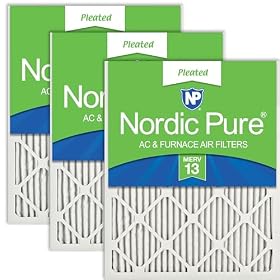
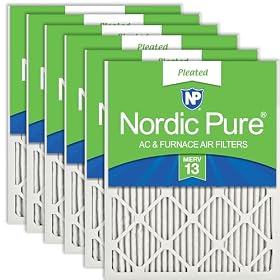
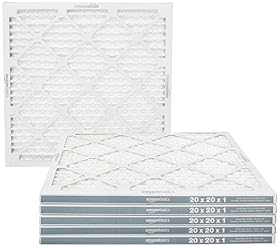
Best filter during wildfire smoke if the furnace can take it
MERV 13 is often the practical target for wildfire smoke, but only if your furnace and filter grille can handle its airflow resistance. Here is how to choose the highest useful rating without starving the system for air.
Wildfire smoke contains fine particles that can enter your home through doors, windows, leaks, and ventilation systems. A MERV 13 filter is usually the best target for smoke-particle removal if your furnace or air handler is designed to handle it. If your system cannot maintain adequate airflow with MERV 13, use the highest-rated filter the manufacturer approves—often MERV 11 or another compatible option—rather than forcing an overly restrictive filter.
Start with the furnace manufacturer's limit
Check the furnace, air-handler, or HVAC installation manual for its approved filter rating and maximum pressure drop. The rating printed on the filter is not enough to determine compatibility. A filter's actual resistance depends on its thickness, pleat design, surface area, and how dirty it becomes.
Also check:
The existing filter size, such as 16 x 25 x 1 inches or another exact size
Whether the system uses a 1-inch filter or a deeper media cabinet
The airflow direction arrow on the filter
Whether the filter sits at the return grille or inside the furnace cabinet
Any manufacturer instructions for MERV rating or replacement intervals
Do not install a thicker filter unless the filter cabinet and grille are designed for it. A 4-inch filter may offer more surface area and lower resistance than a 1-inch filter at the same MERV rating, but it is not a drop-in replacement for every system.
Why MERV 13 is preferred for wildfire smoke
MERV, or Minimum Efficiency Reporting Value, describes how effectively a filter captures particles across specified size ranges. Wildfire smoke includes very small particles, so a higher-efficiency filter can capture more of the particulate matter that passes through a basic filter.
MERV 13 is commonly recommended for reducing airborne fine particles when the HVAC system can maintain proper airflow. It is not a guarantee that the home will be smoke-free, and it does not remove every gas or odor associated with smoke.
A useful decision order is:
Choose MERV 13 if the HVAC manufacturer approves it and the system has adequate airflow.
Choose the highest approved rating below MERV 13 if MERV 13 causes airflow problems or is not approved.
Use a properly sized pleated filter rather than a higher-rated filter that does not fit securely.
Replace the filter sooner during heavy smoke exposure, before it becomes visibly loaded or airflow drops.
Product prices and availability are accurate as of the date/time indicated and are subject to change. Any price and availability information displayed on Amazon.com at the time of purchase will apply to the purchase of this product.
Check whether your system can take MERV 13
A qualified HVAC professional can measure the system's static pressure and confirm whether a particular filter is suitable. That is the most reliable method, especially for older furnaces, systems with weak airflow, or installations that already have duct restrictions.
Without special tools, you can still watch for warning signs after installing an approved filter:
Noticeably weaker airflow from supply registers
Longer heating cycles or difficulty reaching the thermostat setting
The furnace shutting off on a high-temperature limit
A filter that bows inward or is pulled tightly against the grille
New whistling or unusual airflow noise
Reduced airflow from some vents compared with others
The blower running but little air coming from the registers
If these symptoms appear, turn the system off if it is overheating or repeatedly cycling, then reinstall the previous approved filter or contact an HVAC professional. Do not defeat a limit switch, remove a required filter, or operate the furnace with the access panel improperly installed.
Product prices and availability are accurate as of the date/time indicated and are subject to change. Any price and availability information displayed on Amazon.com at the time of purchase will apply to the purchase of this product.
One-inch versus deeper filters
A higher MERV rating is not the only factor that affects airflow. Filter thickness and surface area matter too.
A 1-inch MERV 13 filter can become restrictive more quickly than a deeper filter because it has less media area. A properly designed deeper media filter may provide more filtration area and a longer service interval, but it requires a compatible cabinet. The filter must fit firmly without gaps and must not block the blower compartment or other components.
If your current system uses a 1-inch filter and you want more smoke protection, do not improvise a deeper replacement. Ask an HVAC professional whether the return can be modified for a deeper filter cabinet and whether the ductwork can support the required airflow.
Product prices and availability are accurate as of the date/time indicated and are subject to change. Any price and availability information displayed on Amazon.com at the time of purchase will apply to the purchase of this product.
What about MERV 11 or lower?
MERV 11 can be a reasonable compromise when MERV 13 is not approved or causes excessive resistance. It may capture fewer fine smoke particles than MERV 13, but a correctly fitted MERV 11 filter with good airflow is preferable to an incompatible filter that makes the furnace overheat or reduces circulation.
Lower-rated filters may be appropriate for systems with strict airflow limitations, but they provide less protection against fine smoke particles. If smoke is severe, improve protection by limiting infiltration as well: keep windows and doors closed, use a properly sized portable air cleaner with a HEPA filter in occupied rooms, and avoid bringing outdoor air indoors unless the ventilation system is designed and configured for the conditions.
Does a carbon filter remove wildfire-smoke odor?
Some filters include a thin activated-carbon layer that can reduce certain odors. However, a small amount of carbon in a furnace filter has limited capacity and should not be treated as a complete solution for smoke gases or strong odors.
For particle removal, prioritize a compatible pleated filter with the highest approved MERV rating. For odor reduction, a dedicated air cleaner with a substantial carbon stage may be more effective. Do not select a filter solely because it advertises odor control if its airflow specifications and HVAC compatibility are unclear.
How often should you replace the filter during smoke events?
There is no single replacement schedule for every home. Check the filter frequently during a wildfire-smoke event, especially if the furnace fan runs continuously or the outdoor air is visibly smoky. Replace it when it is loaded with dust or smoke residue, airflow is declining, or the manufacturer’s service interval has been reached.
A filter can look only moderately dirty while its resistance has increased. Conversely, replacing it too often is wasteful if it remains clean and airflow is normal. Keep a spare approved filter available so you can replace it promptly when conditions worsen.
Turn off the furnace or air handler before changing the filter. Install the new filter in the direction shown by the arrow, make sure it is seated evenly, and close the grille or access panel securely.
When a filter is not enough
A furnace filter only cleans air that passes through the HVAC return. It does not prevent smoke from entering through leaks, open windows, doors, fireplaces, or other pathways, and it does not filter air in rooms where the HVAC fan is not circulating.
During severe smoke:
Keep windows and exterior doors closed.
Run the HVAC fan in the mode recommended by the equipment manufacturer if continuous circulation is appropriate.
Use a portable HEPA air cleaner sized for the room.
Avoid using exhaust fans unnecessarily, since they can pull smoky outdoor air into the home.
Check indoor air quality with an appropriate monitor if smoke exposure is prolonged.
If the furnace cannot safely use MERV 13, the best practical setup is the highest manufacturer-approved filter rating plus room air cleaning and reduced smoke infiltration. If the system struggles even with its normal filter, have the ductwork, blower, coil, return grille, and filter cabinet evaluated rather than moving to a lower-quality filter indefinitely.
FAQ
Is MERV 13 always the best furnace filter for wildfire smoke?
No. MERV 13 is a strong choice for smoke particles when the furnace or air handler is approved for it and can maintain adequate airflow. If it causes excessive resistance or is not approved, use the highest compatible rating, such as MERV 11 where appropriate.
Can a MERV 13 filter damage a furnace?
A filter does not automatically damage a furnace because it is labeled MERV 13, but an overly restrictive or heavily loaded filter can reduce airflow and contribute to overheating, limit trips, poor heating performance, or blower strain. Follow the HVAC manufacturer's filter guidance.
Is a 1-inch MERV 13 filter safe for every furnace?
No. Filter thickness, pleat design, surface area, and system airflow all affect resistance. A 1-inch filter may be more restrictive than a deeper filter, and a deeper filter is not safe to install unless the cabinet is designed for it.
How often should I change a furnace filter during wildfire smoke?
Check it frequently during smoky conditions and replace it when it becomes loaded, airflow declines, or the manufacturer's interval is reached. Heavy smoke and continuous fan operation can require more frequent replacement than normal.
Does a furnace filter remove the smell of wildfire smoke?
A particulate filter can reduce airborne smoke particles, but it does not remove all smoke gases or odors. Filters with a small carbon layer may provide limited odor reduction; a dedicated air cleaner with a substantial carbon stage may work better for gases and odor.