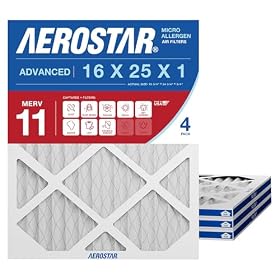
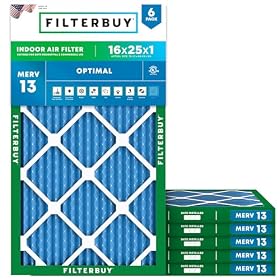
A 16x25x1 MERV 11 filter can improve filtration of household dust, pollen, and some smaller airborne particles, but the correct fit and unrestricted airflow matter just as much as the MERV rating.
A 16x25x1 MERV 11 filter is a practical choice for many forced-air furnaces, air handlers, and central HVAC systems—but confirm both the filter size and the equipment’s approved MERV range before buying. “16x25x1” is usually the nominal size; the filter’s actual dimensions can be slightly smaller, and even a small mismatch can allow air to bypass the filter or make it difficult to install.
Check the size before ordering
Measure the existing filter or the opening in the filter slot. Do not rely only on the printed size if the current filter fits loosely or is difficult to remove.
Check these dimensions:
Nominal size: Commonly printed as 16x25x1.
Actual size: The precise length, width, and thickness listed by the manufacturer.
Airflow direction: Look for an arrow on the frame and point it toward the furnace, air handler, or return duct.
A one-inch filter should slide into its slot without bending, crushing, or leaving a large gap around the frame. If the filter bows or the access door will not close, verify the actual dimensions before forcing it into place.
What MERV 11 means
MERV, or Minimum Efficiency Reporting Value, describes how effectively a filter captures particles across standardized size ranges. MERV 11 generally offers more filtration than basic low-MERV filters and can help capture household dust, pollen, mold spores, and other airborne particles.
The rating does not tell you how much airflow resistance a particular filter creates. Two MERV 11 filters can have different pressure-drop characteristics because of differences in pleat depth, filter media, surface area, and frame design.
For that reason, do not select a filter based on MERV alone. Check the furnace or air-handler documentation, the manufacturer’s recommended filter rating, and any available airflow or static-pressure requirements. A filter that is too restrictive for the system can reduce airflow, increase operating strain, cause coil icing, or contribute to heating and cooling problems.
Product prices and availability are accurate as of the date/time indicated and are subject to change. Any price and availability information displayed on Amazon.com at the time of purchase will apply to the purchase of this product.
When MERV 11 is a reasonable choice
MERV 11 may be suitable when:
The HVAC manufacturer permits MERV 11 filtration.
The system uses a standard one-inch filter slot.
You want more particle filtration than a basic pleated filter provides.
The household has typical dust or pollen concerns.
The filter remains easy to install and the system maintains normal airflow.
Homes with asthma, severe allergies, wildfire smoke concerns, or other indoor-air-quality needs may require a different filtration strategy. A higher-MERV filter is not automatically better if the HVAC system cannot move enough air through it. Ask an HVAC professional to evaluate compatibility when the manufacturer’s guidance is unclear.
Product prices and availability are accurate as of the date/time indicated and are subject to change. Any price and availability information displayed on Amazon.com at the time of purchase will apply to the purchase of this product.
Features worth comparing
Pleat count and media area
Pleated filters generally provide more filter surface than flat panel filters. More surface area can help a filter capture particles while maintaining usable airflow, but pleat count alone is not a reliable performance measure. Look for clearly stated specifications and a rigid frame that will not collapse in the slot.
Actual dimensions
Compare the listed actual dimensions with the old filter and the filter opening. A nominal 16x25x1 filter may not measure exactly 16 by 25 by 1 inch. The replacement should match the slot closely enough to prevent significant air leakage without being too tight.
Frame construction
A damp or collapsing cardboard frame can deform and create bypass gaps. Choose a filter with a frame appropriate for the installation and replace it sooner if it becomes wet, bent, or damaged.
Pack quantity
Multipacks can lower the cost per filter and make scheduled replacement easier. Before buying a large pack, confirm that the size, actual dimensions, MERV rating, and airflow suitability match your system.
How often to replace a 16x25x1 MERV 11 filter
The right replacement interval depends on the home, system runtime, pets, construction dust, smoking, and outdoor air quality. A one-inch filter should be inspected at least monthly when you are establishing a schedule. Replace it when the media is visibly loaded with dust or when the manufacturer’s interval is reached.
A filter may need more frequent replacement during heavy heating or cooling use, after remodeling, or when pets and airborne dust are present. Do not wait until the filter is completely dark or visibly clogged; substantial loading can restrict airflow before that point.
Write the installation date on the filter frame or set a calendar reminder. Always turn off the HVAC system before removing the filter, and follow the equipment manufacturer’s instructions.
Common buying and fit mistakes
Choosing the MERV rating without checking compatibility
A higher rating can increase resistance. Use the furnace or air-handler documentation as the final authority rather than assuming that any MERV 11 filter is acceptable.
Confusing nominal and actual dimensions
The printed 16x25x1 size is a category, not necessarily the exact measurement. Compare actual dimensions whenever possible.
Installing the filter backward
The arrow should point in the direction of airflow, usually toward the furnace or air handler. Installing it backward can reduce performance and may increase resistance.
Leaving gaps around the filter
Air takes the path of least resistance. If air can flow around the filter, some dust bypasses the media. A badly oversized or undersized filter should be replaced with the correct size rather than wedged into place.
Buying a filter that is too thick
A one-inch filter is not interchangeable with a deeper filter unless the HVAC cabinet is designed for that thickness. A filter that prevents the access panel from closing can create an unsafe or poorly sealed installation.
If airflow drops after installing the filter
First confirm that the filter is the correct actual size and that the airflow arrow points toward the equipment. Then inspect the filter for early loading, moisture, damage, or collapse. Check that return grilles are open and unobstructed and that supply registers have not been closed.
If the system still has weak airflow, unusual noise, short cycling, icing, or overheating, turn the equipment off if necessary and consult an HVAC technician. Do not remove protective panels or alter electrical components unless qualified to do so. The issue may involve duct restrictions, a blower problem, a dirty coil, or a control fault rather than the filter itself.
Bottom line
Choose a 16x25x1 MERV 11 filter only after confirming the actual dimensions, airflow direction, and HVAC compatibility. A well-fitting pleated filter with suitable airflow characteristics is usually a better choice than simply selecting the highest available MERV rating. Inspect one-inch filters monthly at first, replace them before they become heavily loaded, and follow the furnace or air-handler manufacturer’s instructions.
FAQ
What are the actual dimensions of a 16x25x1 filter?
The nominal size is 16 by 25 by 1 inches, but actual dimensions vary by manufacturer. Check the product listing and compare them with the existing filter and slot before ordering.
Is MERV 11 too restrictive for a furnace?
It depends on the furnace, filter slot, blower, and filter design. Consult the equipment manufacturer’s approved MERV range. A MERV 11 filter may be suitable for some systems but too restrictive for others.
How often should a 16x25x1 MERV 11 filter be changed?
Inspect it at least monthly when establishing a schedule. Replace it when visibly loaded or according to the manufacturer’s guidance. Homes with pets, dust, smoke, or heavy HVAC use may require more frequent replacement.
Can I use a 16x25x1 MERV 13 filter instead of MERV 11?
Only if the furnace or air handler is rated for it and airflow remains adequate. A higher MERV rating can increase resistance, so confirm compatibility before switching.