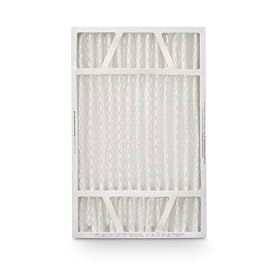
A 4-inch media filter can provide more dust-holding capacity than a 1-inch filter, but only when its actual dimensions, airflow direction, and MERV rating match the cabinet and HVAC system.
A 4-inch media filter is the right replacement only when it matches the cabinet’s actual opening, filter depth, airflow direction, and recommended MERV range. Before ordering, remove the old filter and record its printed size, airflow arrow, and MERV rating. Nominal sizes can differ from the filter’s actual measurements, so a filter that appears to be the same size may not slide into the cabinet or seal correctly.
Confirm the cabinet and filter size
Start with the existing filter rather than measuring only the cabinet opening.
Turn off the furnace or air handler at the thermostat.
Remove the filter and photograph or write down the label.
Record the nominal size, actual length and width, depth, MERV rating, and airflow direction.
Measure the old filter with a tape measure if the label is missing or unclear.
Check the cabinet door, frame, or installation paperwork for a manufacturer or replacement-filter number.
A filter described as 4 inches may have a slightly different actual depth. That difference matters in a tight media cabinet. The replacement should fit without excessive force, bowing, or a large bypass gap around the frame.
Match the actual depth and frame dimensions
Filter listings commonly use nominal dimensions, while the actual filter can be somewhat different. Compare the listed actual dimensions with the old filter and the cabinet’s filter channel.
Pay particular attention to:
Length and width: The filter must sit squarely in the tracks or frame.
Depth: A thicker filter may not allow the cabinet door to close or the retaining mechanism to engage.
Frame construction: The filter frame must remain rigid and seal against the cabinet.
Gasket or edge seal: A compatible seal helps prevent unfiltered air from passing around the media.
Airflow arrow: Install the filter in the direction marked by the arrow, generally toward the furnace or air handler.
If the old filter has a cabinet-specific shape, tab, handle, or gasket, do not assume a standard rectangular filter will be interchangeable. Use the cabinet documentation or the filter manufacturer’s compatibility information.
Product prices and availability are accurate as of the date/time indicated and are subject to change. Any price and availability information displayed on Amazon.com at the time of purchase will apply to the purchase of this product.
Choose the MERV rating carefully
MERV indicates how effectively a filter captures particles under a standardized rating system. A higher MERV rating is not automatically the best choice for every residential HVAC system. Denser filter media can increase resistance to airflow, especially as the filter loads with dust.
Use the HVAC manufacturer’s recommended MERV range when it is available. If the system documentation specifically allows MERV 13, a compatible MERV 13 4-inch filter may be appropriate. If the system does not specify a rating, ask an HVAC professional before moving to a substantially higher MERV filter.
A suitable filter should balance particle capture with acceptable airflow. Signs of an airflow problem can include weak supply airflow, unusual whistling, difficulty maintaining the thermostat setting, or a filter that appears to pull inward while the system runs. These symptoms can have other causes, so do not diagnose the system from filter behavior alone.
Product prices and availability are accurate as of the date/time indicated and are subject to change. Any price and availability information displayed on Amazon.com at the time of purchase will apply to the purchase of this product.
Consider a 4-inch pleated filter for longer service intervals
A 4-inch pleated filter has more media area than a shallow filter of the same face size. That can provide more dust-holding capacity and may allow a longer replacement interval, but the correct schedule depends on the home, occupants, pets, construction dust, HVAC runtime, and the filter manufacturer’s instructions.
Inspect the filter regularly when installing a new type. Replace it when it is visibly loaded or at the interval specified by the manufacturer, whichever calls for earlier attention. Homes with shedding pets, smokers, respiratory concerns, or recent remodeling may need more frequent inspection.
Do not rely on a calendar interval alone. A filter that looks clean may still be the wrong size or poorly sealed, while a filter in a dusty environment can load much sooner than expected.
Product prices and availability are accurate as of the date/time indicated and are subject to change. Any price and availability information displayed on Amazon.com at the time of purchase will apply to the purchase of this product.
When a different filter is not a substitute
A 1-inch pleated filter is not automatically a substitute for a 4-inch media filter. The cabinet may require the deeper filter to seal properly, and a shallow filter can leave space for air to bypass the media. Conversely, forcing a 4-inch filter into a cabinet designed for a thinner filter can damage the frame or prevent the access door from closing.
A filter grille or return-air grille is also a different component. It holds a filter at a return opening, while a media filter is typically installed in a dedicated cabinet near the furnace or air handler. Confirm which location your system uses before ordering.
Troubleshoot fit and airflow problems
The filter will not slide in
Check whether the replacement is deeper than the old filter, whether it is entering the correct track, and whether the frame is square. Never force it. Recheck the actual dimensions and cabinet model information.
The cabinet door will not close
The filter may be too deep, installed backward, or not fully seated in its track. Inspect the retaining clips and door seal for obstructions. If the filter size is correct but the door still will not close, stop using the system until the cabinet fit is resolved.
There is a gap around the filter
A small mismatch in length or width can allow unfiltered air to bypass the media. Check the frame and gasket, then compare the replacement’s actual dimensions with the original. Do not attempt to solve a substantially incorrect size with loose tape or improvised packing.
Airflow seems weaker after replacement
First verify that the filter arrow points toward the furnace or air handler and that the filter is not visibly clogged. Check that all supply and return registers are open and that the return grille is not blocked. If airflow remains weak, reinstall the previous known-compatible filter if it is still usable and contact an HVAC professional. The issue may involve ductwork, a blower, a coil, or another system component.
When to replace the filter or call for help
Buy a replacement media filter when the existing filter is dirty, damaged, damp, collapsed, or no longer seals in the cabinet. Replace the cabinet or seek professional help when the frame is bent, the access door will not latch, the filter channel is damaged, or the correct size cannot be confirmed.
If the HVAC system repeatedly struggles after installing the correct filter, do not simply switch to a lower-quality filter without checking the system. Have a qualified technician evaluate airflow and static pressure, particularly if the furnace overheats, shuts down, makes unusual noises, or produces electrical or burning odors. Follow the furnace, air-handler, cabinet, and filter manufacturer instructions for installation and service.
FAQ
How do I know whether a 4-inch filter will fit my cabinet?
Compare the replacement filter’s actual length, width, and depth with the old filter and check the cabinet’s model or compatibility information. The filter should slide into the tracks, seal around the frame, and allow the cabinet door to close without force.
Is a higher MERV rating better for a 4-inch media filter?
Not necessarily. A higher MERV rating can capture smaller particles but may also increase airflow resistance. Use the HVAC manufacturer’s recommended MERV range, and confirm system compatibility before choosing MERV 13 or another high rating.
Can I use a 1-inch filter instead of a 4-inch filter?
Usually not unless the cabinet is specifically designed to accept both depths and the thinner filter can seal correctly. A 1-inch filter in a 4-inch cabinet may leave bypass gaps and may not be held securely.
How often should I replace a 4-inch furnace filter?
Follow the filter and HVAC manufacturer’s guidance, but inspect it regularly. Dust, pets, smoke, construction work, and heavy system use can load a filter sooner than a general calendar schedule suggests.