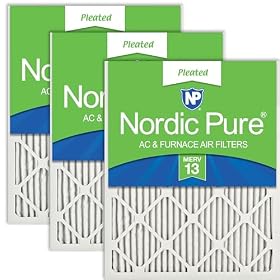
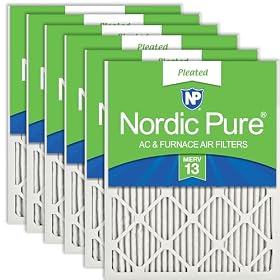
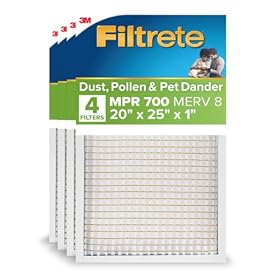
A pet-friendly furnace filter should capture hair and airborne particles without restricting more airflow than your system can handle. Match the exact filter size first, then choose a practical MERV rating and pack quantity.
Pet hair is usually too large for a furnace filter to capture efficiently on its own, but a pleated filter can help catch the dander, dust, and smaller particles that travel with it. The right pet-home filter pack is the correct physical size, has a suitable MERV rating, and can be changed often enough to avoid becoming clogged.
Choose the exact filter size first
Read the size printed on the existing filter and compare it with the dimensions listed on the replacement package. Furnace filters commonly have both a nominal size and slightly smaller actual dimensions. For example, a filter labeled with a nominal size may measure differently in practice, so do not assume that two filters fit solely because their printed dimensions look similar.
Before buying a pack, check:
Length, width, and thickness
Whether the filter slides into the furnace, air handler, or return grille
The airflow arrow printed on the filter
Whether the filter is disposable or a washable type specified by the system
How many filters the home uses
If the old filter is missing or the label is unreadable, measure the filter slot or grille carefully. Do not force a filter that bows, leaves large gaps, or prevents the access panel from closing.
Pick a MERV rating that fits the system
MERV describes how effectively a filter captures different sizes of airborne particles under a standardized rating system. A higher MERV rating generally provides finer filtration, but it can also create more resistance to airflow, especially as the filter loads with dust and pet debris.
For many homes, a mid-range pleated filter is a reasonable starting point. MERV 8, MERV 11, and MERV 13 filters are common choices, but the best rating depends on the HVAC equipment, filter thickness, return-air design, and the manufacturer's guidance.
A MERV 13 filter may be useful when the system is designed to handle it, particularly when reducing smaller airborne particles is a priority. It is not automatically the best choice for every furnace. If the system's manual specifies a maximum MERV rating, follow that guidance. When the system struggles with airflow, have an HVAC professional evaluate it rather than simply installing a denser filter.
Why filter thickness matters
A deeper filter can provide more media area and may offer lower resistance than a very thin filter with a similar rating, but only if the equipment and housing are designed for that depth. A 1-inch filter slot cannot accept a thicker filter just because it offers better filtration.
Product prices and availability are accurate as of the date/time indicated and are subject to change. Any price and availability information displayed on Amazon.com at the time of purchase will apply to the purchase of this product.
Look for a pleated design for pet homes
Pleats increase the filter's surface area compared with a flat panel of the same face size. This gives dust and dander more media to collect on, although every filter eventually becomes restrictive as it loads.
For a pet home, prioritize:
A pleated disposable filter in the correct size
A MERV rating supported by the HVAC system
A rigid frame that stays square in the slot
Clear airflow-direction markings
A pack size that matches your replacement schedule
A furnace filter is not a substitute for removing loose hair. Vacuum pet areas, clean return grilles, and groom pets regularly so the filter does not fill prematurely with large debris.
Higher-filtration option for compatible HVAC systems
Product prices and availability are accurate as of the date/time indicated and are subject to change. Any price and availability information displayed on Amazon.com at the time of purchase will apply to the purchase of this product.
Choose the pack size based on replacement frequency
A multipack is useful when the filter size is stable and you already know the rating works with your system. Buy fewer filters first if you are changing filtration levels or are unsure whether the filter fits correctly.
Pet homes may need more frequent filter changes than homes with little dust or shedding, but there is no universal calendar interval. Inspect the filter about once a month at first. Replace it when the media is visibly loaded, airflow appears reduced, or the manufacturer's replacement guidance calls for it.
Replace the filter sooner when:
Multiple pets shed heavily
Construction or remodeling has added dust
The home has frequent smoke or outdoor-particle exposure
The filter looks gray, packed, or visibly clogged
Heating or cooling airflow has noticeably weakened
A heavily loaded filter can reduce comfort and increase system strain. Do not extend its life just to use every filter in the pack.
Product prices and availability are accurate as of the date/time indicated and are subject to change. Any price and availability information displayed on Amazon.com at the time of purchase will apply to the purchase of this product.
Check the installation before turning the system on
Turn off the furnace or air handler according to the manufacturer's instructions.
Remove the old filter without shaking dust into the return opening.
Confirm the replacement filter's size and airflow arrow.
Point the arrow toward the furnace, air handler, or supply side of the system.
Slide the filter fully into its track without bending it.
Close and secure the access panel or grille.
Restore power and check that air moves normally through the registers.
If the filter rattles or has visible gaps around its edges, the size may be wrong or the filter housing may need attention. Do not add loose material around the filter as a substitute for a proper seal.
Signs the filter choice may be too restrictive
A dirty filter can cause the same symptoms as an overly restrictive filter, so install a clean, correctly sized replacement before drawing conclusions. Warning signs can include weak airflow, uneven temperatures, unusual system cycling, or a filter that becomes heavily loaded unusually quickly.
For systems with cooling, persistent airflow problems can contribute to coil icing. Turn the system off and consult the equipment instructions or a qualified HVAC professional if you see ice, hear abnormal electrical or mechanical noises, smell burning, or notice repeated short cycling.
Do not remove the filter permanently to improve airflow. If a clean filter with the approved size and rating still causes problems, the issue may involve ductwork, the blower, the filter housing, or another HVAC component.
When to choose a different replacement
Choose a different filter pack when the listed dimensions do not match the existing filter, the thickness is wrong, or the MERV rating exceeds the equipment manufacturer's recommendation. If the filter repeatedly collapses, bows, or will not seal, investigate the housing and return-air setup rather than buying increasingly expensive filters.
If you cannot identify the correct filter size or MERV limit, contact the furnace manufacturer, an HVAC contractor, or a qualified technician. For an older system with persistent airflow problems, professional evaluation is usually more useful than switching among filter ratings.
FAQ
What MERV rating is best for a home with pets?
A mid-range rating such as MERV 8 or MERV 11 may be suitable for many systems, while MERV 13 can provide finer filtration when the HVAC equipment is designed to handle it. Follow the furnace or air-handler manufacturer's airflow and MERV guidance first.
Do furnace filters catch pet hair?
They can catch some hair, especially larger pieces that reach the return grille, but filters are mainly intended to capture airborne particles. Regular vacuuming, grooming, and cleaning of return grilles reduce the amount of hair reaching the filter.
How often should a pet-home furnace filter be replaced?
Inspect it about monthly at first and replace it when it is visibly loaded or airflow drops. Homes with multiple or heavily shedding pets may need more frequent changes than homes with one low-shedding pet.
Can I use a MERV 13 filter in any furnace?
No. MERV 13 filters can create more airflow resistance, particularly when dirty. Check the equipment manufacturer's requirements or ask a qualified HVAC professional before upgrading to a higher rating.