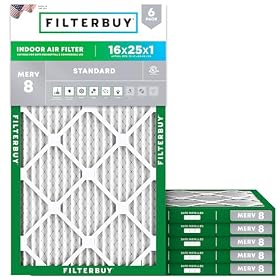
For a dusty renovation, the best furnace filter is the highest-efficiency filter your HVAC system can handle without excessive airflow restriction. A correctly sized pleated filter, frequent replacement, and good dust-control practices matter more than simply choosing the highest MERV rating.
Renovation dust can load a furnace filter quickly, especially during drywall sanding, demolition, cutting, and flooring work. The best furnace filter for a dusty renovation is usually a correctly sized pleated filter with a MERV rating your HVAC system supports—not automatically the highest-MERV filter available. Use temporary dust-control measures, check the filter often, and replace it when it is visibly loaded or airflow begins to drop.
The best filter choice for renovation dust
For most forced-air homes, start with these priorities:
Use the exact filter size specified for the system. The nominal size printed on the old filter may not be the same as its actual dimensions, so confirm the size and thickness before ordering.
Choose a pleated filter rather than a flat fiberglass filter. Pleats provide more surface area for capturing dust, although all filters create some airflow resistance.
Use the highest MERV rating approved by the furnace or air-handler manufacturer. MERV 8, MERV 11, and MERV 13 are common categories, but the right choice depends on the equipment, filter thickness, and system design.
Replace it more often than normal. Renovation dust can fill a filter in days rather than months.
A filter labeled MERV 13 is not automatically the best option for every furnace. A restrictive filter can reduce airflow, make the blower work harder, cause coil or heat-exchanger problems, or contribute to freezing in some air-conditioning systems. Check the equipment manual or ask an HVAC professional if the manufacturer does not clearly specify an acceptable filter rating.
Why renovation dust is hard on HVAC systems
Construction dust is not one uniform contaminant. Drywall dust, wood particles, insulation fibers, masonry dust, and fine sanding debris can quickly coat a filter. Some particles are large enough to be caught by nearly any filter, while finer particles are more difficult to capture and may pass through gaps around an improperly fitted filter.
The HVAC system can also spread dust if it runs while work is taking place. Dust may enter through return grilles, settle inside ductwork, or collect on the blower and indoor coil. A new filter cannot fully protect a system from uncontrolled airborne dust.
Product prices and availability are accurate as of the date/time indicated and are subject to change. Any price and availability information displayed on Amazon.com at the time of purchase will apply to the purchase of this product.
The most important step: keep the HVAC off during dusty work
If practical, turn off the heating and cooling system while demolition, drywall sanding, concrete cutting, or other high-dust work is underway. Follow the equipment and project requirements, especially if the home needs temperature control to protect occupants, materials, or plumbing.
Use local dust control instead:
Isolate the work area with plastic sheeting and sealed openings.
Exhaust dusty air outdoors when safe and permitted.
Use a properly sized HEPA air scrubber in the work area if appropriate.
Keep doors to the mechanical room and return-air pathways closed when possible.
Avoid sweeping dry dust; use suitable dust collection or damp-cleaning methods where compatible with the surface.
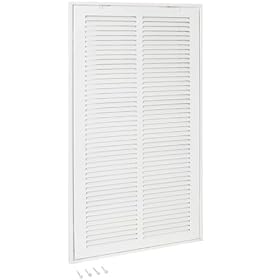
Do not place a filter directly over a return grille unless the grille is designed to accept one.
When the work is complete, clean the area before restarting the system. If substantial dust entered the return system, have the ductwork, blower compartment, and indoor coil evaluated rather than assuming a filter solved the problem.
Higher-efficiency option when approved by the HVAC system
Product prices and availability are accurate as of the date/time indicated and are subject to change. Any price and availability information displayed on Amazon.com at the time of purchase will apply to the purchase of this product.
Choosing the right MERV rating
MERV 8
MERV 8 filters are commonly used in residential systems and can be a reasonable choice when the manufacturer limits filter resistance or when the system uses a narrow filter. They capture ordinary household dust and larger particles but generally provide less fine-particle filtration than higher-MERV options.
MERV 11
MERV 11 offers more fine-particle filtration than MERV 8 and may be a practical middle ground for some systems. Whether it is suitable depends on the filter thickness and the furnace or air handler's airflow capability.
MERV 13
MERV 13 can capture a greater share of smaller airborne particles than lower-MERV filters, but it may also create more resistance, particularly as dust accumulates. Use it only when the HVAC manufacturer or a qualified professional indicates that the system can handle it.
MERV is not a complete measure of how well a filter performs in a particular installation. Filter depth, actual dimensions, gasket quality, cabinet design, blower capacity, and how quickly the filter loads all affect real-world results.
Bulk replacements for frequent construction changes
Product prices and availability are accurate as of the date/time indicated and are subject to change. Any price and availability information displayed on Amazon.com at the time of purchase will apply to the purchase of this product.
Filter thickness and fit matter
A deeper filter often has more media area and may provide good filtration with less resistance than a thin filter of the same nominal width and height. However, a deeper filter only works if the filter cabinet is designed for it. Never force a thicker filter into a narrow slot or leave the access panel unable to close properly.
The filter should fit snugly without being crushed. Large gaps around the edges allow dusty air to bypass the filter. Check for:
The correct length, width, and depth
An intact frame that is not bent or collapsed
A gasket or sealing surface where the system requires one
Airflow-direction arrows pointing toward the furnace or air handler
A filter door or cabinet that closes completely
If the filter rattles, bows inward, or leaves visible gaps, use the correct replacement size or have the rack repaired. An expensive filter cannot perform properly when air flows around it.
Product prices and availability are accurate as of the date/time indicated and are subject to change. Any price and availability information displayed on Amazon.com at the time of purchase will apply to the purchase of this product.
How often should you replace a renovation filter?
There is no reliable universal interval during construction. Inspect the filter frequently—at least every few days during heavy dust-producing work, and daily if the work is especially dusty or the filter loads quickly.
Replace it when:
The media is visibly coated with dust.
The pleats are packed rather than open.
Airflow from supply registers is noticeably weaker.
The filter is damp, damaged, or collapsing.
Dust is bypassing around the frame.
The HVAC system develops unusual noise or struggles to maintain temperature.
Turn off the system before removing the filter, and avoid shaking it indoors. Bag a heavily loaded filter before carrying it through the home. After the renovation, install a fresh filter and return to the replacement schedule recommended by the equipment manufacturer or based on regular inspection.
What if the furnace seems to be struggling?
A loaded filter is one possible cause, but it is not the only one. Use this check order:
Inspect the filter. Replace a dirty, wet, damaged, or incorrectly installed filter with the correct size and an approved rating.
Check the return and supply openings. Remove temporary coverings, furniture, plastic, or debris that could block airflow. Do not remove protective grilles unless the system instructions allow it.
Look for filter bypass. Check whether the filter is backward, loose, warped, or surrounded by gaps.
Confirm the setup. Make sure the filter is installed in the correct location and that all access panels are secured.
Check for symptoms of a larger dust problem. Persistent dust, weak airflow, unusual blower noise, icing, overheating, or repeated shutdowns may indicate contamination or a mechanical issue.
Stop and call a qualified HVAC technician when necessary. Do not operate equipment that repeatedly trips a safety control, smells overheated, makes unusual electrical noises, or cannot maintain safe operation.
Do not stack filters to increase filtration. Do not substitute a high-resistance filter simply because it has a higher MERV number. If the system cannot maintain airflow with the filter your home needs, an HVAC professional may need to evaluate the filter cabinet, blower settings, duct restrictions, and equipment capacity.
When a filter is not enough
A replacement filter is reasonable when the existing one is dirty or damaged and the system otherwise operates normally. Consider professional inspection or cleaning when:
Dust was drawn into the return ducts during demolition.
The blower compartment or indoor coil is visibly dusty.
Dust continues to circulate after installing a clean, properly fitted filter.
Airflow remains weak with a new filter.
The system short-cycles, freezes, overheats, or makes new noises.
The filter rack has gaps or cannot hold the specified size securely.
For a major renovation, prevention is usually less expensive than relying on the furnace filter to catch all airborne construction dust. Shut down the HVAC system when appropriate, isolate the work area, control dust at the tool, and use a filter that matches the equipment's approved airflow requirements.
FAQ
Is MERV 13 the best furnace filter for renovation dust?
Not automatically. MERV 13 captures more fine particles than lower-MERV filters, but it can restrict airflow in systems that are not designed for it. Use the highest MERV rating approved for your furnace or air handler, taking filter thickness and fit into account.
Can I run my furnace during a dusty renovation?
It is generally better to keep the HVAC system off during high-dust activities when practical, while maintaining safe temperatures for the home. Use source control, isolation, and suitable air cleaning in the work area instead. Follow equipment and project requirements, and consult an HVAC professional if the system must run.
How often should I change a furnace filter during construction?
Inspect it at least every few days during dusty work and daily during especially heavy dust production. Replace it when the media is loaded, airflow drops, the filter is damaged, or dust is bypassing around the frame.
Does a thicker furnace filter work better for renovation dust?
A deeper filter may have more filter-media area and can offer useful filtration with lower resistance, but only if the furnace cabinet is designed for that depth. Never force a thicker filter into a shallow slot.
Should I use two furnace filters at once?
No. Stacking filters increases airflow resistance and can damage system performance. Use one correctly sized filter approved by the equipment manufacturer.