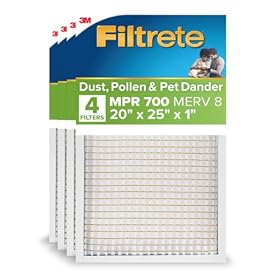
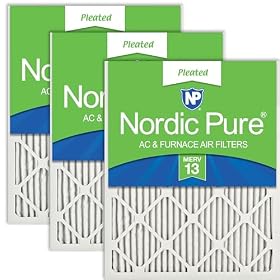
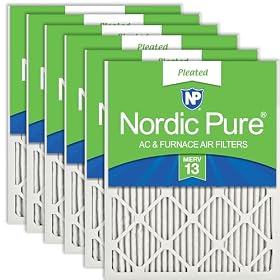
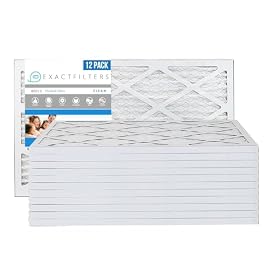
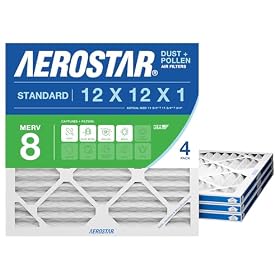
For most homes with a dog and a cat, a correctly sized pleated filter in the MERV 8–11 range is a practical starting point. MERV 13 can capture more fine particles, but only if your furnace or HVAC system is designed to handle the added airflow resistance.
The best furnace filter for a home with a dog and a cat is usually a correctly sized pleated filter with a moderate MERV rating—often MERV 8 to 11. It should capture airborne dander and dust without restricting airflow. MERV 13 may provide stronger fine-particle filtration, but it is not automatically better if your furnace or air handler cannot handle it.
Pet hair also changes the maintenance routine. Much of the larger hair settles on floors, furniture, and the return grille instead of reaching the furnace filter. The filter's main job is catching airborne dust, dander, and smaller debris before they enter the HVAC equipment.
Start with the correct filter size
Check the dimensions printed on the existing filter, the filter slot, or the furnace manufacturer's label. A filter may be labeled with nominal dimensions, such as 16 by 25 by 1 inches, while its actual measured dimensions are slightly smaller. Match the size and thickness your system requires rather than forcing in a filter that is too large or too thick.
A filter should fit securely with minimal gaps around the frame. A loose fit allows air to bypass the filter, while an oversized filter can bend, collapse, or prevent the access panel from closing.
If your system uses a filter grille or a thicker media cabinet, confirm the required depth before ordering. A 1-inch filter and a 4-inch filter are not interchangeable unless the housing is designed for both.
Choose a MERV rating that your HVAC system can handle
MERV measures how effectively a filter captures particles across test conditions. Higher MERV ratings generally provide finer filtration, but the filter may also create more resistance to airflow—especially as it loads with dust and pet debris.
MERV 8
MERV 8 is a reasonable baseline for many standard residential systems. It can capture common household dust and some airborne pet-related particles while generally placing less airflow demand on the system than denser filters.
This level may be suitable when the furnace is older, the filter slot is shallow, or the manufacturer's instructions do not approve a higher rating.
MERV 11
MERV 11 is often a useful middle ground for homes with pets. It provides more particle capture than MERV 8 and may help reduce airborne dander, provided the HVAC system is compatible and the filter is replaced before it becomes heavily loaded.
MERV 13
MERV 13 can capture a higher proportion of fine airborne particles, but it should not be treated as a universal upgrade. A dense MERV 13 filter can reduce airflow in systems with weak blowers, restrictive ductwork, undersized return grilles, or filters that are left in place too long.
Use MERV 13 only when the furnace, air handler, filter cabinet, or HVAC professional indicates that the system can support it. If the system manual specifies a maximum MERV rating, follow that guidance.
Product prices and availability are accurate as of the date/time indicated and are subject to change. Any price and availability information displayed on Amazon.com at the time of purchase will apply to the purchase of this product.
Pick a pleated filter, not a flat fiberglass filter
For most pet-owning households, a pleated filter is the practical choice. Its folded media provides more surface area than a basic flat filter, allowing it to capture more household dust and dander without relying solely on a very dense material.
Look for:
The exact required size and thickness
A clearly stated MERV rating
A rigid frame that does not bow during installation
An airflow arrow showing the correct direction
A replacement schedule appropriate for the filter and household
Electrostatic or premium filter materials may offer additional particle capture, but marketing claims should not replace checking the MERV rating, physical fit, and HVAC compatibility.
Higher-filtration option when the HVAC system allows it
Product prices and availability are accurate as of the date/time indicated and are subject to change. Any price and availability information displayed on Amazon.com at the time of purchase will apply to the purchase of this product.
Replace the filter more often in a pet household
A dog and cat can load a filter faster than a home without pets, particularly during shedding seasons. Inspect the filter monthly at first. Replace it when the media is visibly coated, airflow appears restricted, or the manufacturer's replacement interval has been reached.
A one-inch filter may need more frequent replacement than a deeper media filter because it has less filter area. Homes with multiple pets, frequent shedding, allergies, renovation dust, or a lot of HVAC runtime may also need a shorter interval.
Do not wait until the filter is completely gray or packed with debris. A loaded filter can reduce airflow, increase blower strain, and make heating or cooling less effective.
Product prices and availability are accurate as of the date/time indicated and are subject to change. Any price and availability information displayed on Amazon.com at the time of purchase will apply to the purchase of this product.
Reduce pet hair before it reaches the furnace
A furnace filter is not a substitute for controlling loose hair at the source. To reduce the debris reaching the return grille:
Brush and groom pets regularly.
Vacuum floors, furniture, and the area around return grilles.
Keep return grilles unobstructed by furniture, rugs, or pet beds.
Clean the grille surface when hair begins collecting on it.
Avoid placing loose, aftermarket mesh over a return grille unless the HVAC manufacturer approves it; an added layer can restrict airflow.
Portable air cleaners can help with airborne particles in occupied rooms, but they do not make it safe to install a filter that is too restrictive for the central HVAC system.
Replacement grille filter for systems filtering at the return
Product prices and availability are accurate as of the date/time indicated and are subject to change. Any price and availability information displayed on Amazon.com at the time of purchase will apply to the purchase of this product.
Signs the filter may be too restrictive
A higher-rated filter may be contributing to an airflow problem if you notice:
Weak airflow from supply vents
Longer heating or cooling cycles
Uneven temperatures between rooms
A furnace that overheats or repeatedly shuts down
Excessive whistling or air noise at the filter slot
A filter that bows inward during operation
Ice forming on an air-conditioning coil or refrigerant line
These symptoms can also result from blocked ducts, a dirty blower, closed vents, low refrigerant, or other HVAC faults. Turn off the system and consult the owner's manual or a qualified HVAC professional if the furnace repeatedly shuts down, smells overheated, or shows other safety-related symptoms. Do not bypass a limit switch or other safety control.
A practical choice for most pet homes
For a typical home with a dog and a cat, begin with the exact replacement size and a quality pleated MERV 8, ต่อ or MERV 11 filter that the HVAC system allows. Consider MERV 13 when the manufacturer approves it and reducing fine airborne particles is a priority.
The best result comes from the combination of a compatible rating, an airtight fit, and timely replacement. A very high-MERV filter that restricts airflow—or a correctly rated filter left in place too long—can perform worse for the HVAC system than a moderate filter maintained properly.
FAQ
What MERV rating is best for a house with a dog and a cat?
MERV 8 to 11 is a practical starting range for many residential HVAC systems. MERV 13 may capture more fine particles, but use it only when the furnace or air handler is rated for it and airflow remains adequate.
Does a furnace filter catch dog and cat hair?
It catches some airborne hair and debris, but much of the larger pet hair settles before reaching the filter. Regular grooming, vacuuming, and cleaning return grilles are important for controlling larger hair.
How often should I change a furnace filter with pets?
Inspect the filter monthly and replace it when it is visibly loaded or when the manufacturer's interval is reached. Homes with multiple pets or heavy shedding may need more frequent replacement, especially with a 1-inch filter.
Can I use a MERV 13 filter in any furnace?
No. A MERV 13 filter can create more airflow resistance than a lower-rated filter. Check the furnace or HVAC manual, filter cabinet specifications, or consult a qualified HVAC professional before upgrading.
Should I buy a thicker furnace filter for a home with pets?
A thicker filter can provide more media area and may last longer, but it requires a compatible filter cabinet or slot. Do not substitute a thicker filter for a 1-inch filter unless the housing is designed for it.