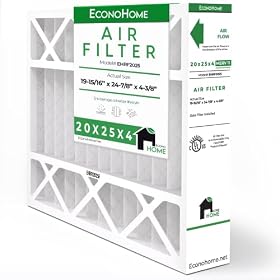
Best filter if the furnace already struggles in heating season
If your furnace already has weak airflow, short cycles, or trouble keeping up, the best filter is usually the lowest-efficiency filter that meets your household needs and your system’s airflow requirements. Correct sizing, a good seal, and regular replacement matter as much as the MERV rating.
If your furnace already struggles during heating season, avoid automatically upgrading to the highest-MERV filter available. A filter with greater particle capture can also create more airflow resistance, especially when it is thick, dirty, undersized, or installed in a system that was not designed for it. The better choice is a correctly sized filter with a moderate MERV rating that your furnace and filter rack can handle.
Before changing filter types, confirm the furnace’s airflow problem is not caused by a blocked return, closed registers, a dirty blower, duct leakage, or a mechanical fault. If the furnace is overheating, shutting off repeatedly, making unusual noises, or producing a burning smell, turn it off and contact a qualified HVAC professional.
The best starting point: a correctly fitted moderate-MERV filter
For many existing residential systems with restricted airflow, a pleated filter in a moderate MERV range is a sensible starting point. The exact rating should follow the furnace manufacturer’s guidance and the needs of your home—not simply the highest number on the package.
A moderate-MERV filter can be preferable when:
Airflow from the registers is already weak
The furnace runs for long periods but rooms remain cold
The system short-cycles or trips a high-limit safety control
The return grille makes excessive whistling or pulling noise
The home uses a standard, relatively thin filter slot
A high-efficiency filter becomes visibly loaded quickly
A higher-MERV filter may still be appropriate for certain allergies, smoke concerns, or other indoor-air-quality needs, but it may require a deeper filter cabinet, a larger filter surface area, or an HVAC system designed for the added resistance. Ask an HVAC professional to measure airflow or static pressure if you need high filtration and the furnace is already having trouble.
What to look for in the replacement filter
Match the actual filter size
Use the size printed on the existing filter or measure the opening. Do not rely only on the nominal size listed on packaging. The filter should fit the rack without bending, gaps, or excessive force.
An incorrect filter can cause two problems: a filter that is too small allows unfiltered air around the edges, while one that is too large may collapse, bow, or restrict airflow. Follow the airflow arrow printed on the filter and point it toward the furnace or air handler.
Consider filter thickness
A deeper pleated filter can provide more surface area than a thin filter, potentially allowing useful filtration with less resistance than a similarly rated thin filter. However, a deeper filter requires a compatible cabinet or grille. Never force a thicker filter into a shallow slot or substitute one without confirming that the rack is designed for it.
Changing from a thin filter to a deep media filter may require equipment or cabinet modifications. That is a job for an HVAC professional, particularly if the furnace has existing airflow problems.
Choose pleats, but do not judge by pleat count alone
Pleated filters generally offer more filtration area than flat fiberglass-style filters of the same face size. But more pleats do not automatically mean lower airflow resistance. Filter media, thickness, surface area, and the manufacturer’s pressure-drop data all matter.
If airflow is the priority, compare filters at the same size and look for manufacturer information about pressure drop. A lower pressure drop at the required airflow is more useful than a higher MERV number by itself.
Treat MERV 13 as a system decision
MERV 13 filters can capture smaller particles than lower-rated filters, but they are not automatically the best choice for a furnace that already has weak airflow. A MERV 13 filter may be suitable when the system is designed for it, the filter is deep enough, or the HVAC professional confirms that airflow remains within the equipment’s requirements.
If the system uses a standard thin filter and is already struggling, do not install a restrictive MERV 13 filter as a troubleshooting step. Start with the manufacturer-approved rating, then address the underlying airflow issue.
Moderate-MERV replacement filters for airflow-sensitive furnaces
Product prices and availability are accurate as of the date/time indicated and are subject to change. Any price and availability information displayed on Amazon.com at the time of purchase will apply to the purchase of this product.
Check the furnace before blaming the filter
A filter change may help, but it cannot fix every heating problem. Check these causes in order:
Inspect the filter. Replace it if it is visibly loaded with dust, collapsed, damp, or installed backward. A filter can look clean on one side while being clogged on the other.
Check the return and supply openings. Make sure furniture, rugs, curtains, and boxes are not blocking return grilles or supply registers. Keep all intended registers open unless an HVAC professional says otherwise.
Inspect the filter fit. Look for air gaps around the frame, a bent filter, or a filter that does not sit securely in its rack.
Listen for unusual airflow noise. Whistling can indicate a gap, a restrictive filter, a closed damper, or a return-side restriction.
Check the blower area only as instructed by the manufacturer. Turn off power before opening any access panel, and do not reach into the furnace. A dirty blower wheel or indoor coil requires appropriate service.
Check for short cycling or overheating. If the furnace starts and stops repeatedly, the issue may involve airflow, controls, flame safety, or another fault. Continuing to operate it can cause damage.
Do not remove the filter permanently to improve airflow. Operating without filtration can allow dust to collect on the blower, heat exchanger, evaporator coil, and other components.
Product prices and availability are accurate as of the date/time indicated and are subject to change. Any price and availability information displayed on Amazon.com at the time of purchase will apply to the purchase of this product.
How often should a filter be changed?
Replace the filter according to the manufacturer’s instructions, then adjust the interval based on its actual condition. Homes with pets, remodeling dust, frequent cooking, smoke, or many occupants may load filters faster. A filter that becomes dirty quickly can restrict airflow before the expected replacement interval.
Check the filter monthly during heavy heating use. If it is visibly dirty, airflow has declined, or the furnace is producing more noise, replace it with the correct size and an approved rating rather than waiting for a calendar reminder.
A filter that becomes dirty unusually fast may also point to air leaks around the filter rack, excessive dust entering through return ducts, construction debris, or a system problem. Replacing filters more often may help temporarily, but it does not correct the source.
Higher-filtration options for compatible HVAC systems
Product prices and availability are accurate as of the date/time indicated and are subject to change. Any price and availability information displayed on Amazon.com at the time of purchase will apply to the purchase of this product.
When a different solution makes more sense
If your household needs stronger particle filtration but a thin high-MERV filter restricts the furnace, ask about increasing filter surface area. A larger return grille, multiple filter locations, or a properly sized deep-media cabinet can sometimes provide filtration with less resistance than forcing a high-efficiency filter into a small slot.
Those changes should be designed for the furnace and duct system. Do not enlarge duct openings, alter return paths, or modify the furnace cabinet without professional guidance.
The reasonable next step is usually a filter replacement when the current filter is dirty, damaged, or the wrong size. If a correctly sized, manufacturer-approved filter does not improve airflow—or if the furnace overheats, short-cycles, or cannot maintain temperature—schedule HVAC service instead of repeatedly trying different MERV ratings.
Larger filter grilles for increasing filter surface area
Product prices and availability are accurate as of the date/time indicated and are subject to change. Any price and availability information displayed on Amazon.com at the time of purchase will apply to the purchase of this product.
Bottom line
For a furnace that already struggles in heating season, the best filter is usually a correctly fitted pleated filter with a moderate, manufacturer-approved MERV rating and a suitable pressure drop. Do not assume MERV 13 or the thickest filter is automatically better. Keep returns and registers clear, replace loaded filters promptly, and have the system checked if airflow remains weak or the furnace cycles abnormally.
FAQ
What MERV rating is best for a furnace with weak airflow?
Use the lowest MERV rating that meets your household’s filtration needs and is approved for the furnace. A moderate MERV rating is often a safer starting point than a high-MERV filter when airflow is already weak, but the furnace manufacturer’s instructions take priority.
Can a high-MERV filter make a furnace work harder?
Yes. Higher-efficiency filters can create more airflow resistance, particularly when they are thin, dirty, oversized for the system, or installed in a restrictive filter rack. System design, filter thickness, surface area, and pressure-drop data all affect the result.
Is MERV 13 bad for a struggling furnace?
Not necessarily, but it should not be installed without considering the furnace and duct system. A professional can determine whether the system can maintain adequate airflow or whether a deeper cabinet or larger filter area is needed.
Should I remove the furnace filter if the furnace is overheating?
No. Removing the filter can allow dust to damage internal components and does not fix the underlying problem. Replace a clogged filter with the correct approved type, clear blocked registers and returns, and contact a qualified HVAC professional if overheating or short cycling continues.
Can a thicker furnace filter improve airflow?
A deeper filter can have more media surface area and may offer lower resistance at a comparable filtration level, but only if the furnace cabinet or filter grille is designed for it. Do not force a thick filter into a shallow slot.