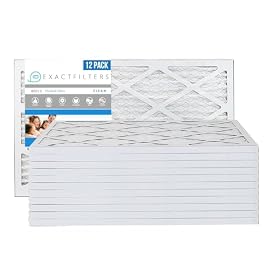
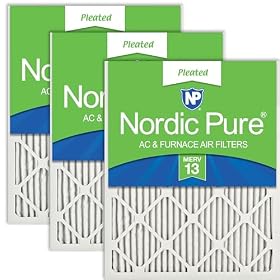
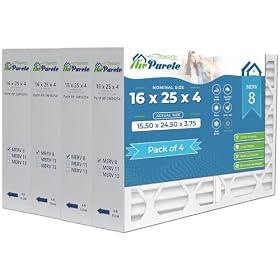
Best filter if you only want to change it quarterly
If you want to replace your furnace filter only four times a year, choose a correctly sized pleated filter with a MERV rating your HVAC system can handle—and still inspect it monthly.
If you only want to change your furnace filter quarterly, choose a properly sized pleated filter with a moderate MERV rating, then verify that it is not loading with dust before the three-month mark. A filter that lasts three months in one home may clog much sooner in a home with pets, construction dust, allergies, or heavy HVAC use.
The best quarterly filter is not necessarily the highest-MERV filter. It is the filter that captures the particles you care about without restricting the airflow your furnace or air handler requires.
What to look for in a quarterly furnace filter
Match the exact size first
Read the dimensions printed on the existing filter or measure the filter slot. Pay attention to all three dimensions:
Length
Width
Thickness or depth
The nominal size printed on a filter may be rounded, while the actual dimensions can be slightly different. The replacement should fit securely without bending, gaps, or excessive force. A loose filter allows air to bypass it; an oversized filter may be difficult to install or may not seat correctly.
If the filter cabinet lists a required size, follow that information. Do not substitute a thinner or thicker filter merely because the length and width appear to match.
Choose pleated media for longer service intervals
A pleated filter generally provides more filtering surface than a flat panel filter of the same face size. That extra surface can help it hold dust over a longer interval, although it does not guarantee a three-month service life.
For a quarterly schedule, a quality pleated filter is usually a more practical choice than a basic flat filter. The filter should remain rigid enough to avoid collapsing or bowing into the airflow.
Use a MERV rating appropriate for the system
MERV describes how effectively a filter captures different particle sizes. A higher rating can improve filtration, but it may also create more resistance to airflow. The effect depends on the filter’s design, thickness, face area, and the HVAC system—not just the MERV number printed on the package.
As a general starting point:
MERV 8: Often a reasonable baseline for basic dust and common household particles.
MERV 11: A possible middle ground when you want more particle capture and the system supports it.
MERV 13: Useful for finer particle filtration when the HVAC manufacturer or an HVAC professional confirms that the system can handle it.
Do not automatically choose MERV 13 for a quarterly schedule. A high-efficiency filter that loads quickly can restrict airflow before the scheduled change. Check the furnace, air-handler, or filter-cabinet instructions for the recommended maximum rating. When that information is unavailable, an HVAC professional can check system airflow and static pressure.
Is a three-month filter really enough?
Quarterly replacement is more realistic when the home has relatively low dust production, limited pet hair, and moderate heating and cooling use. You may need to change the filter sooner if you have:
Multiple shedding pets
Several occupants or frequent visitors
Indoor smoking or combustion sources
Ongoing remodeling or construction dust
A wood-burning fireplace or stove
Severe outdoor air pollution
Household members with significant allergies or respiratory sensitivity
Continuous fan operation or unusually heavy HVAC use
A filter located in a return grille may also load faster than one serving a smaller return, because it handles more air. Homes with more than one filter may require different replacement intervals for different locations.
Product prices and availability are accurate as of the date/time indicated and are subject to change. Any price and availability information displayed on Amazon.com at the time of purchase will apply to the purchase of this product.
How to maintain a quarterly filter schedule safely
A quarterly schedule should mean inspect every month and replace when needed, not install a filter and ignore it for 90 days.
Turn off the furnace or air handler before removing the filter.
Note the airflow arrow on the old filter.
Inspect the filter surface under good light.
Look for a thick, gray coating, matted dust, pet hair, or areas where debris is bypassing the frame.
Confirm the filter has not bowed, collapsed, become damp, or developed an odor.
Install the replacement with the airflow arrow pointing toward the furnace or air handler.
Record the installation date on the filter frame or in a phone reminder.
If the filter looks heavily loaded after one month, replace it rather than waiting for the quarterly date. A dirty filter can reduce airflow, increase operating strain, and make comfort problems more likely.
Product prices and availability are accurate as of the date/time indicated and are subject to change. Any price and availability information displayed on Amazon.com at the time of purchase will apply to the purchase of this product.
Signs your filter is too restrictive or overdue
A dirty or overly restrictive filter can contribute to:
Weak airflow from supply registers
Rooms that do not reach the thermostat setting
Longer heating or cooling cycles
A whistling or rattling filter grille
A furnace that shuts down and restarts repeatedly
An air conditioner coil that begins to ice
A visibly collapsed filter
These symptoms can also have other causes, including blocked registers, duct problems, a failing blower, a dirty coil, or a control issue. Replace an obviously dirty filter first, but do not keep increasing the filter rating as a solution.
If the furnace overheats, repeatedly trips a limit switch, or produces unusual electrical or burning odors, turn it off and contact a qualified HVAC professional. Do not bypass safety controls.
Product prices and availability are accurate as of the date/time indicated and are subject to change. Any price and availability information displayed on Amazon.com at the time of purchase will apply to the purchase of this product.
When a thicker filter may help
A deeper filter can provide more media area and potentially lower airflow resistance than a thin filter with the same nominal efficiency. However, the HVAC cabinet must be designed for that depth. A thicker filter is not a drop-in upgrade unless it fits the slot and the manufacturer permits it.
Never force a deep filter into a shallow cabinet or leave gaps around a filter that is too small. If you want to change filter depth, confirm the cabinet dimensions and system requirements first.
Best practical choice for most quarterly schedules
For many homes, the sensible starting point is:
The exact replacement size specified by the system
A pleated design rather than a flat panel
A MERV rating recommended by the furnace or air-handler manufacturer
A filter depth that fits the existing cabinet correctly
Monthly visual inspections, even when the planned replacement interval is three months
Choose the lower suitable MERV rating if airflow is marginal, the system is older, or the manufacturer provides no support for a higher rating. Choose a higher rating only when the system can maintain adequate airflow and the added filtration addresses a real household need.
If filters become visibly dirty well before three months, the reasonable next step may be more frequent replacement, a larger return-air filter surface, improved filter access, or an HVAC inspection—not simply a more restrictive filter. If the filter cannot be found, does not fit securely, or the cabinet is damaged, have the system evaluated before selecting a replacement size.
FAQ
What MERV rating is best for a filter changed every three months?
There is no universal quarterly MERV rating. MERV 8 is a common starting point, while MERV 11 or MERV 13 may be appropriate when the HVAC system supports the added airflow resistance. Follow the equipment manufacturer’s guidance and inspect the filter monthly.
Can I really leave a furnace filter in for three months?
Possibly, but the interval depends on dust, pets, HVAC runtime, filter size, and filter design. Inspect it monthly and replace it sooner if it is visibly loaded, damp, damaged, or restricting airflow.
Is a higher-MERV filter better for quarterly replacement?
Not automatically. Higher MERV filtration can capture smaller particles but may increase airflow resistance. A filter that is too restrictive can reduce comfort and stress the system, so use only the highest rating the HVAC manufacturer or a qualified professional supports.
Should the furnace filter be changed every 90 days or every season?
Use the installation date as a guide rather than relying only on seasons. A filter may load faster during heavy heating or cooling, renovation, wildfire smoke, or periods of high dust. Monthly inspections are more reliable than a fixed calendar interval.
What should I do if the filter is dirty after only one month?
Replace it and investigate the cause. Check for pets, construction dust, a return grille that is drawing unusually high airflow, gaps around the filter, or a filter that is too small. If rapid loading continues, an HVAC professional can check the return system and equipment.