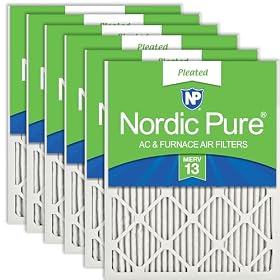
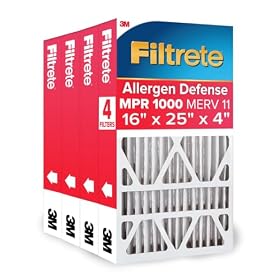
A furnace filter can be too restrictive for a particular HVAC system. Higher MERV ratings capture smaller particles, but they may also increase resistance to airflow—especially in a thin 1-inch filter slot. Here is how to choose an efficient filter without creating airflow problems.
What do you need help with?
Open an answer, or tell us what we should cover next.
Answered in this guide
Choose a furnace filter that balances clean air and airflow
Match the exact filter size, consider thickness, follow the equipment guidance, and replace the filter on schedule. Choose the highest-efficiency filter the complete HVAC system can support without causing excessive airflow resistance.
Understand why a higher-MERV filter can reduce airflow
A higher MERV rating captures smaller particles, but the rating alone does not show the filter’s pressure drop. Filter thickness, system design, and the available airflow capacity also affect how restrictive it will be.
MERV 13 is not automatically too restrictive. It can work when the complete HVAC system, filter thickness, and installation can handle its added resistance, but the furnace model alone does not provide the answer.
Know when changing the filter may not solve airflow problems
If airflow problems continue, a lower-MERV filter may help when the equipment does not approve the higher rating, but changing filters is not always enough. A broader system change may make more sense in some cases.
Request a topic and help us choose what to build next.
Measure HVAC static pressure after installing a restrictive filter
Compare the yearly cost of different MERV filters
Diagnose airflow problems caused by other HVAC parts
Requests help us prioritize the next guide. No email required.
One anonymous request per topic.
A filter can be too efficient—or, more precisely, too restrictive—for a furnace. A higher MERV rating usually captures smaller particles, but it can also make the blower work harder if the filter creates too much resistance. The risk is greatest when a high-MERV filter is installed in a narrow 1-inch slot, used past its replacement interval, or fitted into a system that was not designed for that pressure drop.
The right filter is not automatically the one with the highest MERV rating. It is the highest-efficiency filter your furnace and duct system can move air through properly.
How filter efficiency affects airflow
MERV, or Minimum Efficiency Reporting Value, describes how effectively a filter captures different particle sizes. A higher MERV rating generally provides finer filtration, but the rating alone does not tell you exactly how much airflow resistance the filter will create.
Two filters with the same MERV rating can have different pressure drops because of differences in:
Filter thickness and surface area
Pleat depth and spacing
Filter media design
Airflow volume
How clean or loaded the filter is
The condition of the return duct, blower, coil, and registers
A larger, deeper filter often has more media area than a thin filter. That can allow good filtration with less resistance, but the filter still must fit the equipment and cabinet correctly.
Product prices and availability are accurate as of the date/time indicated and are subject to change. Any price and availability information displayed on Amazon.com at the time of purchase will apply to the purchase of this product.
What happens when a filter is too restrictive?
Insufficient airflow can affect both comfort and equipment operation. Possible signs include:
Weak airflow from supply registers
Rooms that do not reach the thermostat setting
Longer heating or cooling cycles
A furnace that overheats and shuts off before completing a cycle
Frequent limit-switch trips or short cycling
More blower noise or whistling at the filter grille
A cooling coil that freezes during air-conditioning operation
Higher blower energy use
These symptoms do not prove that the filter is the cause. A blocked return grille, dirty evaporator coil, closed dampers, crushed ductwork, or a failing blower can create similar problems.
Product prices and availability are accurate as of the date/time indicated and are subject to change. Any price and availability information displayed on Amazon.com at the time of purchase will apply to the purchase of this product.
Is MERV 13 too high for a furnace?
Not necessarily. Many systems can use MERV 13 filtration, but compatibility depends on the complete HVAC system—not only the furnace model. Filter thickness, cabinet design, airflow requirement, blower settings, and the available return-air area all matter.
A MERV 13 filter in a properly sized, deeper media cabinet may create less resistance than a high-efficiency filter in a small 1-inch slot. Conversely, replacing a basic filter with a dense MERV 13 filter in a restrictive return system can reduce airflow enough to cause trouble.
Check the furnace, air handler, filter cabinet, and filter packaging for the manufacturer’s approved filter types. If the documentation gives a maximum pressure drop or airflow requirement, that information is more useful than comparing MERV numbers alone.
Product prices and availability are accurate as of the date/time indicated and are subject to change. Any price and availability information displayed on Amazon.com at the time of purchase will apply to the purchase of this product.
How to choose an efficient filter safely
1. Match the exact filter size
Read the size printed on the existing filter and compare it with the cabinet label. Use the actual nominal size required by the system rather than assuming a filter that looks close will fit.
A filter that is too small can allow unfiltered air around the edges. A filter that is too large may bend, collapse, or restrict the cabinet opening. The airflow arrow should point toward the furnace or air handler.
2. Consider filter thickness
Thin 1-inch filters have relatively little media area, so a high-MERV version may become restrictive more quickly. Deeper filters—such as those designed for a dedicated media cabinet—often provide more surface area, but they are not interchangeable with a 1-inch filter unless the cabinet is built for them.
Never force a thick filter into a shallow slot or operate the system without the correct cabinet or retaining hardware.
3. Use the manufacturer’s guidance
The equipment manual or filter cabinet instructions may specify an acceptable filter type, thickness, or efficiency range. Follow those instructions before choosing a higher-MERV replacement.
If the system has been modified, the original manual may no longer tell the whole story. A qualified HVAC technician can measure airflow and static pressure to determine whether a particular filter is appropriate.
4. Replace the filter on schedule—and earlier when needed
A filter that was suitable when clean can become too restrictive as dust accumulates. Check it monthly at first, especially during heavy heating or cooling use. Replace it when visibly loaded or according to the manufacturer’s interval, whichever comes first.
Homes with pets, construction dust, smoke, or frequent occupancy may load filters faster than the general schedule suggests.
A practical way to troubleshoot airflow after installing a higher-MERV filter
If airflow became weaker after changing filters, use this order of checks:
Confirm the filter is correct. Verify the dimensions, thickness, airflow direction, and MERV rating. Make sure plastic packaging or a shipping insert has been removed.
Check the filter’s condition. A visibly gray or dust-loaded filter can restrict airflow even if it is not completely clogged.
Inspect the filter fit. Look for gaps around the frame, a collapsed pleated section, or a filter that is bowed into the airflow path.
Open supply and return grilles. Make sure registers are not blocked by furniture, rugs, curtains, or closed dampers. The system needs adequate return air as well as supply airflow.
Listen for unusual noise. Whistling at the filter can indicate a poor fit, a restrictive filter, or excessive air velocity through a small return opening.
Compare with the previous filter only as a clue. A lower-MERV filter may appear to restore airflow, but that does not identify the underlying system limitation or prove that it is the best long-term choice.
Arrange professional service if symptoms continue. Repeated furnace shutdowns, short cycling, overheating odors, freezing during cooling, or persistent weak airflow require HVAC diagnosis.
Turn off power to the furnace before inspecting internal components, and do not bypass the filter. If you smell burning, see damaged wiring, or suspect overheating, shut the system down and contact a qualified professional.
When a different filter or system change makes sense
A lower-MERV filter may be reasonable if the equipment manufacturer does not approve the higher rating and airflow problems disappear with the original type. However, switching filters is not always the best solution.
If you want better particle removal but the existing filter slot is narrow, an HVAC professional may be able to evaluate options such as:
A properly sized deeper media cabinet
A larger return-air grille or additional return path
A filter with more surface area
Duct or blower corrections
A system-specific air-cleaning device
Do not enlarge a return opening, alter wiring, change blower settings, or modify the filter cabinet without appropriate technical guidance. The wrong change can create noise, comfort problems, equipment damage, or unsafe furnace operation.
The bottom line
Yes, a filter can be too efficient for a furnace if its pressure drop is too high for the HVAC system. MERV 13 is not automatically excessive, and a lower MERV rating is not automatically safer. Choose the correct size and thickness, follow the equipment manufacturer’s guidance, keep the filter clean, and have airflow or static pressure checked when a higher-efficiency filter causes weak airflow or furnace cycling.
FAQ
Can a MERV 13 filter damage a furnace?
A MERV 13 filter does not automatically damage a furnace, but it can restrict airflow if the system, filter slot, or return duct is not suited to it. Excessive restriction may cause overheating, short cycling, noise, or reduced comfort. Follow the equipment manufacturer’s guidance and have airflow checked if problems appear.
Is a higher MERV rating always better?
No. A higher MERV rating can capture smaller particles, but the filter must also allow adequate airflow. The best choice balances filtration with the furnace and duct system’s airflow capacity.
Why does a 1-inch filter restrict airflow more easily?
A 1-inch filter has limited media area. When the filter media is made denser to achieve a higher MERV rating, airflow resistance can increase significantly, particularly as dust accumulates. A deeper filter may provide more media area, but it must match the cabinet.
How can I tell whether my filter is too restrictive?
Weak register airflow, filter-grille whistling, longer cycles, frequent furnace shutdowns, or a cooling coil that freezes can be warning signs. These symptoms also have other causes, so persistent problems should be checked by a qualified HVAC professional.
Should I use a lower-MERV filter if my furnace has weak airflow?
A lower-MERV filter may temporarily reduce resistance, but first confirm the filter size, fit, airflow direction, cleanliness, open return grilles, and duct condition. If airflow remains poor, the system should be diagnosed rather than relying on a less efficient filter.