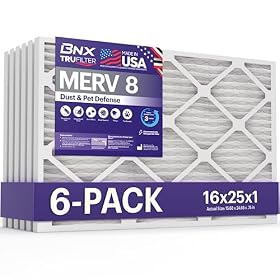
For most homes with pets, a properly sized pleated MERV 8 to 11 filter is a practical balance of pet-related dust control and manageable airflow. The best choice depends on whether you need basic hair and dander capture, stronger fine-particle filtration, or a filter your HVAC system can handle safely.
For most homes with pets, the best starting point is a correctly sized pleated MERV 8 to 11 furnace filter. MERV 8 can capture common household dust and larger pet-related particles, while MERV 10 or 11 provides stronger filtration for smaller particles and dander. The tradeoff is that higher-efficiency filters can restrict airflow more, especially when they are dirty or installed in a system not designed for them.
The filter should fit the slot exactly, match your HVAC manufacturer’s guidance, and be replaced before it becomes visibly loaded with dust and hair. A higher MERV rating is not automatically better if it causes weak airflow, short cycling, excessive noise, or poor heating and cooling performance.
What to look for in a pet furnace filter
Start with the correct size
Read the size printed on the existing filter and verify the dimensions printed on the replacement box. Furnace filters often have a nominal size and a slightly different actual size, so do not rely on appearance alone.
Check all three dimensions:
Length
Width
Thickness or depth
The filter should slide into place without force, and it should not leave large gaps around the frame. An oversized filter may not fit, while an undersized filter can allow unfiltered air to bypass the filter.
Choose a pleated filter
Pleated filters generally provide more filter surface area than basic flat fiberglass filters. That larger surface can help capture more household dust, lint, and pet-related debris without requiring an extreme MERV rating.
Look for a sturdy frame and pleats that are not crushed or separating. The filter should also have a clearly marked airflow arrow. Install the arrow so it points toward the furnace, air handler, or return-side blower—following the equipment and filter instructions if they differ from general guidance.
Pick the lowest MERV rating that meets your needs
MERV ratings describe a filter’s ability to capture particles across standardized size ranges. They do not measure how much pet hair a filter can hold, how long it will last, or whether it is suitable for every furnace.
A practical starting point is:
MERV 8: A reasonable choice for general dust, lint, and larger airborne debris from pets. It is often the conservative option when HVAC airflow capacity is uncertain.
MERV 10: A middle-ground choice for homes wanting more filtration than MERV 8 without moving immediately to a higher-efficiency filter.
MERV 11: A stronger filtration option for smaller airborne particles and dander, provided the HVAC manufacturer allows it and airflow remains adequate.
MERV 13 may capture more fine particles, but it is outside the requested MERV 8 to 11 range and should not be treated as a universal upgrade. Higher filtration can increase resistance to airflow, particularly with a 1-inch filter or a filter that is overdue for replacement.
MERV 8 vs. MERV 10 vs. MERV 11 for pets
MERV 8: Best when airflow is the priority
MERV 8 is a sensible first choice for many standard residential systems, particularly if the home has noticeable airflow limitations or the manufacturer recommends a lower-efficiency filter. It can help reduce ordinary dust and larger airborne debris, but it is not the strongest option for fine dander.
Choose MERV 8 when:
Your HVAC documentation recommends it
You want a conservative replacement for a basic filter
The system already has weak airflow
You are willing to manage pet hair with frequent cleaning and grooming
MERV 10: A useful middle ground
MERV 10 can provide more particle capture than MERV 8 while avoiding an automatic jump to the highest rating in this range. It may suit homes with moderate pet dander, visible dust, or more than one pet, but the system still needs to be approved for the filter’s resistance characteristics.
MERV 11: Best for stronger dander filtration within this range
MERV 11 is the most filtration-focused option among the three, but it is also the one that deserves the most attention to airflow. It may be a good choice when the HVAC system supports it and household members are sensitive to airborne dust or dander.
Do not choose MERV 11 solely because the number is higher. If the filter loads quickly, a lower-MERV filter changed more consistently may be a better practical choice for the equipment.
Product prices and availability are accurate as of the date/time indicated and are subject to change. Any price and availability information displayed on Amazon.com at the time of purchase will apply to the purchase of this product.
Pet hair is not the same as pet dander
A furnace filter is not a substitute for removing loose fur around the home. Large pet hair may collect on return grilles, furniture, and other surfaces before it reaches the furnace filter. The filter’s more important role is capturing airborne dust and smaller particles that travel through the return-air system.
For better results:
Vacuum return grilles and nearby flooring regularly.
Keep pet bedding and high-shedding areas clean.
Replace a loaded filter rather than brushing it and reinstalling it.
Product prices and availability are accurate as of the date/time indicated and are subject to change. Any price and availability information displayed on Amazon.com at the time of purchase will apply to the purchase of this product.
How to avoid starving the furnace for air
“Starving” the furnace usually means the system cannot move enough air through a restricted return path or filter. This can reduce comfort and place extra strain on the blower. In heating mode, inadequate airflow can also contribute to high-temperature limit shutdowns; in cooling mode, it can contribute to coil-freezing problems.
Before moving to a higher MERV rating, check:
The HVAC manufacturer’s permitted filter rating
Whether the filter is unusually thick or dense for the system
Whether the return grille or ductwork is blocked
Whether the filter is already dirty
Whether airflow was normal with the previous filter
Whether the system has a filter-pressure or airflow recommendation
A deeper filter may offer more surface area, but it must fit the equipment’s filter cabinet or grille. Never force a filter into a slot or modify the filter cabinet without appropriate guidance.
Product prices and availability are accurate as of the date/time indicated and are subject to change. Any price and availability information displayed on Amazon.com at the time of purchase will apply to the purchase of this product.
When should you replace a pet filter?
Use the replacement interval printed by the filter manufacturer and inspect the filter sooner in homes with multiple pets, heavy shedding, construction dust, smoke, or frequent HVAC operation. A filter that looks gray, has a visible layer of fur or dust, or causes weaker airflow should be replaced.
Calendar-based intervals are only starting points. A thin filter in a high-shedding home may load faster than a deeper filter in a lightly occupied home. Do not wash or reuse a disposable pleated filter unless it is specifically labeled as washable.
Product prices and availability are accurate as of the date/time indicated and are subject to change. Any price and availability information displayed on Amazon.com at the time of purchase will apply to the purchase of this product.
Signs the filter may be too restrictive
A filter may be too restrictive for the system—or simply overdue for replacement—if you notice:
Weak airflow at several supply vents
Unusual whistling or return-air noise
Longer heating or cooling cycles
The furnace shutting down and restarting unexpectedly
A frozen evaporator coil during cooling
The filter bowing inward or being pulled out of shape
First install a clean, correctly sized filter that meets the manufacturer’s recommendation. If the symptoms continue, turn off the equipment if necessary and have an HVAC professional inspect the airflow, blower, ductwork, and safety controls. Do not bypass the filter or operate the system without one.
Bottom line
For a pet-owning household, choose a correctly sized pleated MERV 8, 10, or 11 filter based on the HVAC manufacturer’s airflow guidance. MERV 8 is the safer starting point when airflow is uncertain, MERV 10 is a practical middle option, and MERV 11 offers stronger filtration when the system is designed to handle it. Frequent replacement, clean return grilles, and pet-hair control matter as much as the MERV number.
FAQ
Is MERV 11 too high for a furnace with pets?
Not necessarily. MERV 11 can be appropriate when the furnace or air handler manufacturer allows it and the system maintains normal airflow. If airflow is weak, the system short-cycles, or the filter loads quickly, use the manufacturer-recommended rating and have the equipment checked if symptoms continue.
Is MERV 8 or MERV 11 better for pet hair?
MERV 11 provides stronger filtration for smaller airborne particles, but neither filter removes all loose pet hair before it settles. Vacuuming, cleaning return grilles, and replacing the filter before it becomes loaded are important for controlling pet hair.
Can I use a MERV 13 filter instead of MERV 8 to 11?
Only if the HVAC manufacturer or a qualified professional confirms that the system can handle it. A higher MERV rating can increase airflow resistance, especially in a thin filter, so it is not a universal upgrade.
How often should I change a furnace filter in a home with pets?
Follow the filter manufacturer’s guidance, then inspect the filter more frequently if you have multiple pets or heavy shedding. Replace it when it is visibly loaded, airflow drops, or the recommended service interval has arrived.