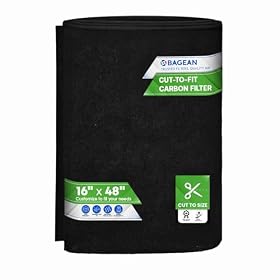
Carbon-odor furnace filters versus a carbon room purifier
Carbon furnace filters are convenient for whole-home, low-level odor control, while a room purifier with a substantial activated-carbon bed is usually better for a persistent odor in one room. The right choice depends on odor strength, airflow, carbon quantity, and whether the filter fits your HVAC system.
A carbon-odor furnace filter can reduce mild odors as air passes through your HVAC system, but it usually contains only a thin layer of activated carbon. A carbon room purifier can be more effective for a persistent odor in one room—especially if it has a meaningful amount of carbon and is operated continuously—but it covers a smaller area and adds another appliance to maintain.
The practical choice is simple: use a carbon furnace filter for broad, low-level odor reduction throughout the home; choose a room purifier when the odor is concentrated, noticeable, or needs more aggressive treatment in a specific room. Neither option replaces finding and removing the odor source.
How the two approaches work
Both products rely mainly on adsorption, in which odor molecules and some gaseous pollutants attach to the surface of activated carbon. This is different from particle filtration. A pleated furnace filter or HEPA filter can capture dust and airborne particles, but it does not automatically remove gases or odors.
Carbon-odor furnace filter
A carbon furnace filter combines particle filtration with a carbon layer or carbon-coated filter material. It treats air only when the HVAC blower moves air through the filter.
Advantages include:
One filter can influence air circulated through much of the home.
It fits into an existing furnace or central-air maintenance routine.
It does not require floor space or a separate electrical outlet.
It can help with light cooking, pet, or general household odors.
Its limitations are important:
Many HVAC carbon filters contain relatively little carbon.
Air passes through the filter quickly, limiting contact time.
The filter may have to handle a large volume of air, including air from rooms where odor treatment is not needed.
Carbon becomes less effective as its adsorption sites fill.
A thicker or more restrictive filter can reduce airflow if the HVAC system is not designed for it.
Carbon room purifier
A room purifier pulls air through a dedicated filter system. It may include a particle filter, such as HEPA, plus an activated-carbon stage. Its performance against odors depends far more on the amount and depth of carbon than on the purifier’s particle CADR alone.
A room purifier is often the better fit when:
The odor is strongest in one bedroom, office, basement, or living area.
You can place the unit close to the odor source.
You want continuous filtration even when the central HVAC fan is off.
The purifier has a substantial carbon filter rather than only a thin carbon-coated sheet.
A purifier with very little carbon may be excellent for dust but disappointing for gases and odors. Look for the manufacturer’s carbon quantity or filter construction when that information is provided. A high particle CADR does not by itself prove strong odor removal.
Which option removes odors better?
For mild odors spread across several rooms, a carbon furnace filter may provide reasonable background control. It uses the home’s existing air circulation and avoids buying another machine.
For a strong or persistent odor in one room, a carbon room purifier is usually the more targeted option. It can repeatedly recirculate that room’s air through a deeper carbon stage, giving the carbon more useful contact opportunities. Run it near the affected area, while allowing enough clearance for its intake and exhaust.
For an odor caused by a continuing source—such as damp materials, smoke intrusion, a spill, a sewer-gas problem, or a chemical product—neither filter should be treated as the solution. Correct the source first and ventilate as appropriate. If you smell fuel, combustion exhaust, or a strong chemical odor, leave the area if necessary and follow the relevant safety guidance rather than relying on air filtration.
Product prices and availability are accurate as of the date/time indicated and are subject to change. Any price and availability information displayed on Amazon.com at the time of purchase will apply to the purchase of this product.
Whole-home coverage versus room-level control
A furnace filter can reach multiple rooms, but only through the HVAC system’s return-air path. Air in a closed room may not circulate through the filter efficiently, particularly when the blower is off or the room has limited return airflow.
A room purifier has the opposite tradeoff. It can provide strong circulation in its rated room area, but it will not reliably clean the entire home. Open doors, room layout, ceiling height, and operating speed all affect real coverage.
Choose a furnace filter when whole-home convenience matters more than intensive treatment in one location. Choose a room purifier when you can identify the affected room and want control over runtime, fan speed, and placement.
Product prices and availability are accurate as of the date/time indicated and are subject to change. Any price and availability information displayed on Amazon.com at the time of purchase will apply to the purchase of this product.
Airflow and MERV considerations
Do not select a furnace filter solely because it has more carbon or a higher MERV rating. The filter must match the exact dimensions and design requirements of the HVAC system.
A higher MERV filter generally captures smaller particles, but it can also create more resistance to airflow. Carbon media adds its own resistance, particularly when it is thick or combined with dense pleats. Excessive pressure drop can contribute to weak airflow, poor heating or cooling performance, noisy operation, or system strain.
Before changing to a higher-MERV or thicker carbon filter:
Confirm the actual filter size printed on the existing filter or equipment documentation.
Check the furnace or air-handler manufacturer’s guidance for acceptable filter types and MERV ratings.
Make sure the filter is installed in the correct airflow direction.
Watch for reduced airflow, unusual blower noise, short cycling, or rooms that no longer heat and cool normally.
If performance changes after installation, reinstall the previously approved filter and ask an HVAC professional to evaluate system static pressure.
Do not install multiple filters in series unless the equipment manufacturer specifically permits it. Extra filtration is not automatically better if it starves the system for air.
Product prices and availability are accurate as of the date/time indicated and are subject to change. Any price and availability information displayed on Amazon.com at the time of purchase will apply to the purchase of this product.
Replacement intervals and operating cost
A furnace filter’s replacement interval depends on filter thickness, dust loading, pets, construction activity, HVAC runtime, and household conditions. Carbon may lose odor-control capacity before the filter looks visibly dirty, so follow the manufacturer’s replacement guidance and pay attention to returning odors.
A room purifier has separate operating costs:
Electricity for continuous fan operation
Replacement particle and carbon filters
Higher noise or energy use at faster fan speeds
Space and maintenance requirements
A carbon purifier may also need more frequent replacement if it is placed near smoke, heavy cooking, solvents, or another concentrated source. Compare the cost and availability of replacement filters before buying.
Decision guide
Choose a carbon-odor furnace filter when:
You want low-level odor reduction across the HVAC-served home.
The odor is mild and not concentrated in one room.
You prefer a simple replacement rather than another appliance.
Your furnace manufacturer allows the filter’s MERV and thickness.
You understand that the carbon layer may be limited.
Choose a carbon room purifier when:
One room has a persistent odor problem.
You want filtration while the central HVAC blower is off.
You can find a model with substantial activated carbon, not just a carbon-colored prefilter.
You need adjustable airflow and targeted placement.
You are willing to buy and replace a separate filter assembly.
Consider both when:
The odor affects the whole home but is strongest in one room.
The furnace filter provides background control while a purifier handles the concentrated area.
Both devices can be operated without creating excessive HVAC restriction or obstructing room airflow.
Bottom line
A carbon-odor furnace filter is the simpler whole-home option, but its odor capacity is often limited by the small amount of carbon and fast HVAC airflow. A carbon room purifier is usually the better targeted choice for a strong odor in one room, provided it contains enough activated carbon to matter. In either case, verify the furnace filter’s size and MERV compatibility, replace saturated media, and address the odor source instead of depending on filtration alone.
FAQ
Are carbon furnace filters effective for odors?
They can reduce mild household odors, but effectiveness varies with the amount of activated carbon, airflow, and odor concentration. Many furnace filters use only a thin carbon layer, so they are not equivalent to a purifier with a deep carbon bed.
Is a carbon room purifier better than a carbon furnace filter?
For a persistent odor in one room, a room purifier with substantial activated carbon is generally the more targeted choice. A carbon furnace filter is more convenient for broad, low-level odor reduction through the home’s HVAC system.
Does a higher MERV rating remove more odors?
Not necessarily. MERV primarily describes particle filtration. Odor and gas removal depend mainly on the type and amount of activated carbon or another gas-treatment medium.
Can a carbon furnace filter restrict airflow?
Yes. A dense pleated filter, high MERV rating, thick carbon layer, or combination of these can increase airflow resistance. Follow the HVAC manufacturer’s guidance and investigate reduced airflow, unusual noise, or short cycling.
How long does activated carbon in a filter last?
There is no universal interval. Service life depends on carbon quantity, airflow, humidity, pollutant concentration, and HVAC or purifier runtime. Follow the product instructions and replace the filter when the recommended interval arrives or odors return.