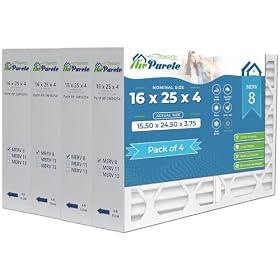
If your HVAC cabinet can accept either a 16x25x1 or 16x25x4 filter, the 4-inch option is often the better airflow choice—but only when the rack, filter dimensions, and blower system are compatible.
A 16x25x4 furnace filter is usually preferable to a 16x25x1 when the cabinet is specifically designed to accept both. Its deeper pleats provide more surface area, which can allow the filter to capture particles with less airflow resistance. However, thickness alone does not guarantee better performance: the filter must fit correctly, have a suitable MERV rating, and be approved for the HVAC system.
Do not force a 4-inch filter into a 1-inch slot or add spacers without confirming that the cabinet and manufacturer instructions support the change.
The main difference: filter depth
The nominal dimensions are the same across the face of the filter:
16x25x1: about 16 inches by 25 inches by 1 inch
16x25x4: about 16 inches by 25 inches by 4 inches
Actual dimensions can be slightly smaller than the nominal size so the filter can slide into its rack. Check the printed size on the existing filter and measure the opening before ordering. A filter that is too large can buckle or leave the access panel open; one that is too small can allow air to bypass the media.
The extra depth of a 4-inch filter allows more pleated media in the same face area. That can provide more dust-holding capacity and a lower pressure drop than a comparable 1-inch filter. The exact result depends on the filter's construction, MERV rating, media area, and the airflow of the system.
When the 16x25x4 is the better choice
Choose the deeper filter when all of these conditions are met:
The filter cabinet has a genuine 4-inch slot or an adjustable rack designed for that depth.
The filter seals against the frame without gaps.
The HVAC manufacturer or technician allows the proposed filter type and MERV rating.
The replacement filter is easy to access and can be changed on schedule.
The system does not show signs of restricted airflow after installation.
A 4-inch filter can be especially useful when the system needs a higher-efficiency filter or when a 1-inch filter loads quickly with dust. The additional media area may let the filter hold more particulate before its airflow resistance rises significantly.
That does not mean every 4-inch filter lasts a specific number of months. Replacement timing depends on dust, pets, construction, smoking, indoor air quality, system runtime, and the filter's design. Inspect the filter regularly at first, then establish a schedule based on its condition and the manufacturer's guidance.
Product prices and availability are accurate as of the date/time indicated and are subject to change. Any price and availability information displayed on Amazon.com at the time of purchase will apply to the purchase of this product.
When the 16x25x1 may be the better choice
The 1-inch option may be appropriate when:
The cabinet is built only for a 1-inch filter.
The deeper filter would interfere with the blower compartment, access door, or nearby components.
Replacement 4-inch filters are difficult to source or access.
The system is designed around a lower-MERV filter and has not been evaluated for increased resistance.
The 4-inch filter would require an improvised frame, loose filler, or a filter that does not seal.
A correctly installed 1-inch filter is better than a deeper filter that is poorly supported or allows air to bypass it. A tight seal around the filter is important because unfiltered air can travel around the media instead of through it.
Product prices and availability are accurate as of the date/time indicated and are subject to change. Any price and availability information displayed on Amazon.com at the time of purchase will apply to the purchase of this product.
MERV rating matters as much as thickness
MERV measures a filter's ability to capture different particle sizes under a standardized test. A higher MERV rating generally provides finer filtration, but it can also create more resistance to airflow. The effect depends on the filter's media area and design.
When comparing 16x25x1 and 16x25x4 filters, compare filters with the same or similar MERV ratings first. This makes the depth comparison more meaningful. For example, a 4-inch filter with a higher MERV rating may not have lower resistance than a 1-inch filter with a lower rating.
Do not select the highest MERV number that fits physically without considering the HVAC system. If the manufacturer specifies a maximum MERV rating, follow that guidance. If the system has weak airflow, unusual noises, frequent limit-switch trips, or comfort problems after a filter change, have an HVAC professional evaluate it.
Product prices and availability are accurate as of the date/time indicated and are subject to change. Any price and availability information displayed on Amazon.com at the time of purchase will apply to the purchase of this product.
How to confirm the cabinet really allows either size
Before buying, check the following:
Measure the filter slot
Remove the existing filter and measure the opening or filter rack. Do not rely only on the nominal label. Confirm the available depth from the sealing surface to the point where the filter would contact the cabinet, blower housing, access panel, or internal supports.
Look for an adjustable rack or deep media cabinet
Some systems use an adjustable filter rack that can accept more than one thickness. Others have separate rails or a removable insert. The rack should hold the filter firmly and maintain a seal on all sides.
Check the airflow arrow
Install the filter with the arrow pointing in the direction of airflow—normally toward the furnace or air handler. A reversed filter may not perform as intended and can sometimes become damaged or collapse.
Verify the access panel
Close the furnace or air-handler panel completely after installing the filter. If the deeper filter prevents the panel from seating, do not operate the system with the panel partly open. Turn off power according to the manufacturer's instructions and correct the fit before running the equipment.
Airflow signs to watch after changing filters
After installing either size, watch for signs of excessive restriction:
Noticeably weaker airflow from supply registers
Whistling or rushing air at the filter slot
A blower that sounds strained or unusually loud
Rooms that no longer reach the thermostat setting
A furnace that shuts down and restarts repeatedly
A heat-pump system that develops abnormal operating behavior
These symptoms can have other causes, including duct problems, a dirty coil, blower issues, or control faults. Do not assume the filter is the only cause. If the furnace overheats, repeatedly trips a limit switch, or produces an electrical smell, stop troubleshooting and contact a qualified HVAC professional.
Which one should you buy?
If the cabinet is designed for a 4-inch filter and the system supports the selected MERV rating, choose the 16x25x4 for its greater media area and potential for lower resistance at comparable efficiency. It is often the more forgiving design when the filter collects dust between changes.
Choose the 16x25x1 when that is the cabinet's specified depth, when the deeper filter cannot be supported and sealed correctly, or when the HVAC manufacturer calls for the 1-inch format.
The safest decision is not simply “thicker is better.” Match the filter's actual dimensions, MERV rating, airflow requirements, and sealing method to the cabinet and equipment. If converting from a 1-inch filter to a 4-inch filter requires cabinet modification, have the work assessed by an HVAC professional rather than improvising a spacer or forcing the filter into place.
FAQ
Can I replace a 16x25x1 filter with a 16x25x4 filter?
Only if the furnace or air-handler cabinet has a rack designed to accept the 4-inch depth and the filter seals correctly. A 4-inch filter should not be forced into a 1-inch slot or installed with an improvised spacer.
Does a 4-inch furnace filter restrict airflow less than a 1-inch filter?
Often, a 4-inch filter has more media area and may create less resistance than a comparable 1-inch filter at the same MERV rating. The actual pressure drop depends on the filter design, MERV rating, airflow, and condition of the filter.
Is a higher MERV rating always better for my furnace?
No. Higher MERV filters capture smaller particles but may increase airflow resistance. Follow the HVAC manufacturer's guidance and choose a rating the system can handle without causing airflow or heating and cooling problems.
How often should I replace a 16x25x4 filter?
There is no universal replacement interval. Inspect it regularly and replace it when it is loaded with dust or according to the filter and HVAC manufacturer's guidance. Homes with pets, construction dust, smoke, or high system runtime may require more frequent changes.
What if my new 4-inch filter does not fit the cabinet?
Do not compress it, bend it, or leave the access panel open. Reinstall the specified filter size and have an HVAC professional evaluate whether a proper deep-filter rack can be installed.