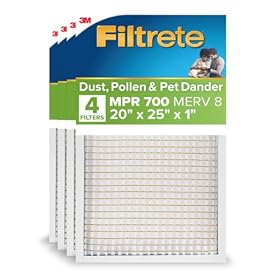
A filter marked 20x25 may have actual dimensions near 19.5x24.5 because furnace filter sizes are commonly nominal. Measure the old filter, confirm the depth, and verify that the replacement sits securely without bypass gaps or airflow restriction.
A furnace filter labeled 20x25 may measure approximately 19.5 x 24.5 inches when you check it with a tape measure. That difference is usually the result of nominal sizing: the printed size identifies the filter category, while the actual filter is made slightly smaller so it can slide into the cabinet or return-air grille.
A 19.5 x 24.5 filter can therefore be the correct replacement for a 20x25 nominal filter—but do not rely on the length and width alone. The filter’s actual depth, the frame design, and the available opening also need to match.
What “20x25 nominal” means
Nominal dimensions are the rounded size used on packaging and product listings. They make it easier to identify a common filter category.
Actual dimensions are the filter’s measured dimensions. A filter sold as 20x25 may measure close to 19.5x24.5, although the exact measurement can vary by manufacturer, filter construction, and depth.
This small reduction helps the filter fit into a slot designed around the nominal size. A full 20-by-25-inch filter may be difficult or impossible to insert if the cabinet opening is slightly smaller.
The difference is not automatically a defect. What matters is whether the filter fits correctly and seals well enough to prevent significant air from going around it.
Product prices and availability are accurate as of the date/time indicated and are subject to change. Any price and availability information displayed on Amazon.com at the time of purchase will apply to the purchase of this product.
Is 19.5 x 24.5 the same as 20x25?
Usually, 19.5 x 24.5 is an actual-size version of a 20x25 nominal filter. However, you should confirm the following before buying:
The actual length and width are close to the old filter.
The depth matches, such as 1 inch, 2 inches, or another listed thickness.
The filter can slide into the slot without forcing it.
The frame is held securely rather than rattling or falling out.
There are no large gaps around the filter that allow air to bypass it.
The airflow arrow points toward the furnace or air handler.
Do not substitute a filter based only on one dimension. A filter with the correct length and width but the wrong depth may not fit the retaining track or may leave an air leak.
Product prices and availability are accurate as of the date/time indicated and are subject to change. Any price and availability information displayed on Amazon.com at the time of purchase will apply to the purchase of this product.
How to check your filter size
1. Turn off the HVAC system
Switch the thermostat to off before removing the filter. If the filter is inside or near the furnace cabinet, follow the equipment manufacturer’s instructions. Do not reach into a running furnace or air handler.
2. Read the old filter’s label
Look for both the nominal size and the actual dimensions. Some filters print a line such as “20 x 25 x 1” along with smaller actual measurements.
Also check the depth. The final number in a size such as 20x25x1 refers to the nominal thickness, not necessarily the exact measured thickness.
3. Measure the old filter
Use a tape measure to check the length, width, and depth. Measure the filter frame rather than the loose filter media. If the frame is bent, crushed, or swollen with dust, compare its measurements with the filter slot as well.
Record the dimensions in the same order used by the manufacturer. For example, write down length, width, and depth instead of relying on memory.
4. Check the opening and tracks
Look inside the filter grille or cabinet slot for bent rails, debris, insulation, or a damaged retainer. These problems can make a correctly sized filter appear too large or leave a gap around a filter that should fit.
5. Confirm the airflow direction
Most furnace filters have an arrow showing airflow direction. The arrow generally points toward the furnace or air handler. Installing the filter backward can increase resistance or reduce the filter’s intended performance.
When an actual 19.5 x 24.5 filter is the right choice
A filter listed as 20x25 nominal with actual dimensions near 19.5x24.5 is generally appropriate when:
The old filter has the same nominal and actual dimensions.
The new filter has the same depth.
It slides into the same slot without excessive force.
The retaining grille or track holds it firmly.
The filter does not bow, collapse, or leave a substantial perimeter gap.
If the filter is slightly smaller than the old one but still leaves a visible bypass gap, do not assume that the nominal size makes it acceptable. Air can take the path of least resistance around the filter instead of passing through the media.
When the nominal label is not enough
Nominal sizing becomes less reliable when the installation has been modified, the filter rack is damaged, or the old filter was the wrong size. It is also important to be cautious when replacing a filter from a different manufacturer because actual dimensions can vary slightly even under the same nominal label.
Use the cabinet opening and the manufacturer’s listed actual dimensions to resolve a close fit. Do not force a filter into a slot. A filter that is too large can buckle, damage the frame, or restrict airflow.
A filter that is too small may allow unfiltered air around the edges. Foam gasket material or a properly designed filter rack may address a small, known gap, but avoid improvising a loose installation with cardboard, tape, or materials that could be pulled into the blower.
Does a thicker filter fit the same 20x25 opening?
Not necessarily. A 20x25x1 filter and a 20x25x4 filter can have similar length and width but require completely different filter cabinets or grilles. The depth must match the available slot.
A deeper pleated filter may offer more media area and potentially lower resistance at the same nominal length and width, but only if the HVAC system and filter housing are designed for it. Do not install a deeper filter just because it has a higher MERV rating or appears to provide more filtration.
What if the new filter is hard to insert?
Check these items in order:
Verify the actual length and width against the old filter.
Confirm the depth and whether the filter frame is thicker than expected.
Inspect the slot for dust buildup, bent metal, or a displaced rail.
Make sure the filter is entering squarely rather than at an angle.
Check that the filter’s frame has not warped from moisture or handling.
Confirm that the grille or access panel is not pressing against the filter.
If the correct replacement still does not fit, stop rather than forcing it. A damaged filter rack may need repair, and an HVAC professional can verify the required size if the installation is unusual.
What if there is a gap around the filter?
A very small clearance may be intentional, but a noticeable gap can let air bypass the filter. First confirm that the replacement’s actual dimensions match the old filter and that the filter is fully seated in its tracks.
If the gap is caused by a damaged rack, missing gasket, or incorrect replacement size, correct that underlying issue. If the filter opening itself is an unusual size, use the actual dimensions specified for that system rather than selecting the nearest nominal size.
Bottom line
A filter measuring about 19.5 x 24.5 inches can be the normal actual size for a 20x25 nominal furnace filter. Match the actual length, width, and depth to the old filter or filter housing, verify the airflow arrow, and make sure the installed filter is secure with no significant bypass gap. If the fit is forced, loose, or unclear, check the filter rack and consult the furnace or air-handler manufacturer before operating the system with the questionable replacement.
FAQ
Can I use a 19.5 x 24.5 filter in a 20x25 furnace slot?
Often, yes. A 19.5 x 24.5 filter may be the actual size of a 20x25 nominal filter. Confirm the depth, compare it with the old filter, and check that it fits securely without a large perimeter gap.
Why are furnace filters smaller than the size printed on the box?
The printed size is usually nominal and rounded. The actual filter is often made slightly smaller so it can slide into the cabinet or return grille.
Does the filter depth matter as much as the length and width?
Yes. A filter with the right length and width can still be incompatible if it is too thick or too thin for the slot. Match all three dimensions.
What should I do if a 20x25 filter leaves a gap?
Recheck the actual dimensions, make sure the filter is seated in its tracks, and inspect the rack or grille for damage. Replace the incorrect filter or repair the rack rather than relying on an improvised seal.