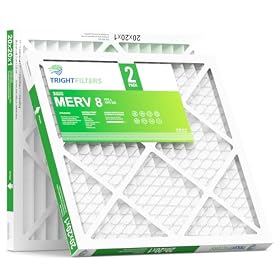
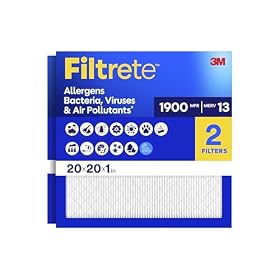
Find a compatible 20x20x1 furnace filter replacement pack by confirming the filter’s actual size, MERV rating, airflow requirements, and pack quantity before buying.
A 20x20x1 replacement pack is the right starting point when your system uses a nominal 20-by-20-by-1-inch filter. Before ordering, confirm the filter’s actual dimensions, match the MERV rating to your HVAC system, and check how many filters the pack contains. A filter that is too large will not fit, while an overly restrictive filter can reduce airflow and make the furnace work harder.
Confirm the filter size
“20x20x1” is usually a nominal size. The filter’s measured length, width, and thickness may be slightly smaller so it can slide into the slot. Check the dimensions printed on your existing filter or measure the filter itself—not just the opening in the grille or cabinet.
For a proper fit:
Measure length and width to the nearest fraction of an inch.
Confirm the filter is about 1 inch thick.
Check whether the existing filter is labeled 20x20x1 or has a different nominal size.
Do not force a filter into a slot that is too small.
Avoid a loose fit that allows air to bypass the filter around its edges.
If the current filter has a brand-specific actual size printed on its frame, use that information when comparing replacement listings.
Choose an appropriate MERV rating
MERV indicates how effectively a filter captures particles. A higher rating is not automatically better for every furnace. In a one-inch filter, higher-efficiency media can create more airflow resistance, especially as the filter loads with dust.
Use the MERV rating recommended by your furnace, air handler, or filter-grille manufacturer when that information is available. If the equipment documentation does not specify a rating, a qualified HVAC professional can help determine what the system can handle.
Common considerations include:
Lower MERV options: Often provide less airflow resistance, but capture fewer smaller particles.
Mid-range MERV options: May offer a practical balance for many residential systems, provided the equipment supports the rating.
MERV 13: Can improve capture of smaller airborne particles, but should not be installed solely because it has a higher number. Confirm that the HVAC system and filter grille can maintain adequate airflow.
Watch for warning signs after changing to a more restrictive filter, including reduced airflow from registers, unusual duct or furnace noises, longer heating cycles, or a system that struggles to reach the thermostat setting. Turn off the system and consult the manufacturer or an HVAC professional if you suspect an airflow problem.
Product prices and availability are accurate as of the date/time indicated and are subject to change. Any price and availability information displayed on Amazon.com at the time of purchase will apply to the purchase of this product.
Check the airflow arrow
The arrow on a pleated filter should point in the direction of airflow—typically toward the furnace, air handler, or return-side equipment. Installing it backward can reduce the filter’s intended performance and may cause the frame or media to behave incorrectly.
Before removing the old filter, note the arrow direction. If there is no filter installed, identify the return-air path and follow the equipment instructions rather than guessing.
Product prices and availability are accurate as of the date/time indicated and are subject to change. Any price and availability information displayed on Amazon.com at the time of purchase will apply to the purchase of this product.
Compare replacement-pack details
A replacement pack is useful when you want several filters on hand, but compare more than the headline size. Check each listing for:
Nominal size: 20x20x1
Actual length, width, and thickness
MERV rating
Filter material and pleat design
Number of filters in the pack
Stated replacement interval or usage guidance
Compatibility with your furnace, air handler, or filter grille
A pack with the correct dimensions but an unsuitable MERV rating is not a good replacement. Likewise, a higher filter count is not a bargain if the filters do not fit or create excessive resistance.
Product prices and availability are accurate as of the date/time indicated and are subject to change. Any price and availability information displayed on Amazon.com at the time of purchase will apply to the purchase of this product.
How often to replace a 20x20x1 filter
Replacement timing depends on the filter rating, household dust, pets, construction activity, smoking, system run time, and the manufacturer’s guidance. Inspect the filter regularly rather than relying only on a calendar.
Replace it when the media is visibly loaded with dust, airflow appears reduced, or the manufacturer’s recommended interval has been reached. A one-inch filter generally has less surface area and dust-holding capacity than a deeper filter, so it may need more frequent attention in a dusty or high-use home.
Turn off the furnace or air handler before changing the filter. Dispose of the old filter according to local requirements, and make sure the new filter sits evenly in its slot with no major gaps around the frame.
When to choose a different filter size
Do not substitute a thicker filter simply because it offers more surface area. A 2-inch or 4-inch filter requires a housing designed for that thickness. Installing the wrong thickness can prevent the access panel from closing or create an improper seal.
If the filter slot is damaged, unusually loose, or does not match the size printed on previous filters, resolve the fit issue before buying a large replacement pack. A filter grille, frame, or housing may need repair or replacement.
When to ask for HVAC help
Contact a qualified HVAC professional if:
You cannot identify the correct filter location or airflow direction.
The system does not have enough airflow after a filter change.
The furnace overheats, repeatedly shuts off, or makes new noises.
You want to upgrade to a higher MERV rating but cannot find an equipment recommendation.
The filter housing allows substantial air to bypass the filter.
For a normal filter change, match the actual size, use the equipment-approved MERV rating, install the arrow in the correct direction, and keep replacement filters available before the current one becomes heavily loaded.
FAQ
Is a 20x20x1 filter exactly 20 inches by 20 inches?
Usually not. 20x20x1 is generally a nominal size, and the actual filter may be slightly smaller to fit the slot. Check the dimensions printed on the existing filter or measure it before ordering.
Can I use a MERV 13 filter in a 20x20x1 furnace?
Only if the furnace, air handler, and filter grille can maintain adequate airflow with that rating. Follow the equipment manufacturer’s recommendation or ask a qualified HVAC professional before upgrading to MERV 13.
Which way should the arrow point on a 20x20x1 filter?
The arrow should point in the direction of airflow, normally toward the furnace or air handler on the return side. Follow the system’s instructions if the airflow path is not obvious.
How many filters should I buy in a replacement pack?
Buy enough for the replacement interval recommended for your system and household conditions, while confirming that every filter in the pack has the correct 20x20x1 size and MERV rating.