If your furnace whistles after installing a new filter, the most likely causes are a restrictive filter, incorrect size, poor fit, or an airflow obstruction. Check the filter and return grille first, then investigate ductwork or the blower if the sound remains.
A furnace that starts whistling after a filter change is usually reacting to restricted or misdirected airflow. The filter may be too restrictive, the wrong size, installed backward, not seated properly, or obstructed by dust. Turn off the system before inspecting it, and work through these checks in order.
1. Confirm the filter size and orientation
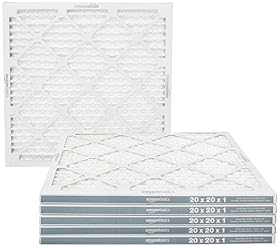
Remove the filter and read the size printed on its frame. The replacement should match the exact length, width, and thickness required by the furnace or filter grille. A filter that is slightly too small can leave gaps and whistle around its edges; one that is too large may bend, crush, or block the opening.
Also check the airflow arrow. It should point toward the furnace or air handler, in the direction of air movement. A backward filter can increase resistance and may cause the filter material to bow inward.
If the filter is bent, damp, damaged, or difficult to slide into place, replace it with the correct size rather than forcing it into the slot.
2. Check whether the new filter is too restrictive
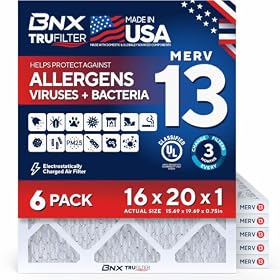
A higher MERV rating generally captures smaller particles, but it can also create more resistance to airflow. This is especially likely with a deep-pleated or high-efficiency filter installed in a shallow filter slot, a system with a powerful blower, or a home with a narrow return-air path.
Do not assume that the highest MERV rating is best for every furnace. Check the furnace, air-handler, or HVAC manufacturer's instructions for the approved filter type and rating. If the whistling began immediately after switching to a higher-rated filter, reinstalling the previously specified rating can help identify the cause.
Avoid operating the system for long periods with no filter. If you temporarily remove the filter as a brief diagnostic step, do so only while watching for dust and follow the equipment manufacturer's guidance. Install a suitable filter promptly.
Product prices and availability are accurate as of the date/time indicated and are subject to change. Any price and availability information displayed on Amazon.com at the time of purchase will apply to the purchase of this product.
3. Make sure the filter is seated correctly
A filter can whistle when air is pulled through a narrow gap around its frame. With the system off, check that:
The filter is fully inserted in its track.
The access cover or grille closes firmly.
No cardboard edge is folded over.
The filter is not bowed or collapsed.
Any retaining clips or rails are in place.
The return grille is not loose or vibrating.
If pressing lightly on the grille changes the sound, the noise may be coming from vibration or a gap around the grille rather than from the filter media itself. Do not permanently seal an access panel that must be removable for service.
Product prices and availability are accurate as of the date/time indicated and are subject to change. Any price and availability information displayed on Amazon.com at the time of purchase will apply to the purchase of this product.
4. Inspect the return grille and nearby airflow path
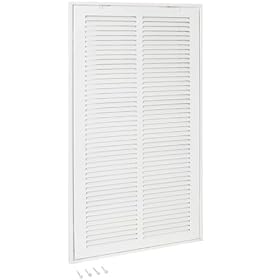
A dirty return grille can make a new filter whistle because the grille itself becomes the narrowest point in the airflow path. Turn off the furnace and vacuum visible dust from the grille. Check that furniture, rugs, curtains, storage boxes, and pet bedding are not blocking the return opening.
If the filter is located behind a return grille, make sure the grille louvers are open and not bent into the filter. A filter installed directly behind a small grille may produce noise even when the filter is the correct size.
Product prices and availability are accurate as of the date/time indicated and are subject to change. Any price and availability information displayed on Amazon.com at the time of purchase will apply to the purchase of this product.
5. Look for a clogged hose, duct, or collapsed liner
Inspect accessible return ducts for obvious obstructions, crushed flexible duct, disconnected sections, or heavy dust buildup. A restricted return duct can create a high-pressure area around the filter and produce a sharp whistle.
Do not reach into the blower compartment or probe deep into ductwork while the system is energized. If a duct is collapsed, disconnected, or inaccessible, an HVAC professional can inspect and repair it safely.
Product prices and availability are accurate as of the date/time indicated and are subject to change. Any price and availability information displayed on Amazon.com at the time of purchase will apply to the purchase of this product.
6. Check for air leaks around the filter rack
Loose filter racks, gaps in sheet metal, and unsealed return connections can create a whistle as air is pulled through a small opening. Look for visible gaps, rattling panels, or dust trails around the filter housing.
Small, accessible metal-joint leaks may sometimes be sealed with foil HVAC tape or approved duct sealant. Do not use ordinary cloth-backed duct tape for permanent duct repairs. Do not cover the filter itself or block service clearances.
7. Consider whether the sound is actually from the blower
If the whistle continues with the correct filter installed and the return path clear, the source may be farther inside the system. Possible causes include a dirty blower wheel, a loose panel, a failing motor, or excessive system pressure caused by undersized ductwork.
Turn the system off and listen for whether the noise occurs only during startup, only while the blower runs, or even when the system is idle. A whistle that changes into scraping, grinding, buzzing, burning odor, repeated shutdowns, or weak airflow needs prompt professional attention.
Do not open electrical compartments or work near the blower and control wiring unless you are qualified and have followed the manufacturer's shutdown procedure. Contact an HVAC technician if the noise persists after the basic filter and grille checks.
What filter should you use?
Use the exact nominal size specified for the furnace or filter grille, and choose a MERV rating within the equipment manufacturer's recommendations. A thicker filter is not automatically better: the filter cabinet must be designed for that thickness, and the system must be able to move air through it.
If you want better filtration, ask an HVAC professional whether the system can handle a higher-MERV filter or whether a larger media cabinet or improved return duct would be more appropriate. A filter that causes loud whistling, weak airflow, hot and cold rooms, or frequent limit-switch shutdowns should not simply be left in place.
When to replace the filter or call for service
Replace the filter when it is the wrong size, damaged, visibly loaded with dust, or too restrictive for the equipment. A replacement unit may be reasonable if the filter rack is warped, the grille is damaged, or the system repeatedly whistles with correctly sized, manufacturer-approved filters.
Call an HVAC professional when the whistle remains after the filter is correctly installed, airflow is noticeably weak, the furnace cycles off unexpectedly, or you find damaged ductwork, electrical symptoms, or a blower-related noise.
FAQ
Can a furnace filter cause whistling?
Yes. A filter can whistle when it is too restrictive, the wrong size, installed backward, bent, or not seated tightly in its track. A gap around the filter or grille can also create a whistle.
Should I use a lower-MERV filter to stop the whistling?
Only if the lower rating is approved for your furnace or air handler. A lower-MERV filter may reduce airflow resistance, but the equipment manufacturer's filter requirements should take priority.
Is it safe to run a furnace with the filter removed?
A furnace should not be operated without filtration except for a brief, controlled diagnostic check consistent with the manufacturer's guidance. Install a suitable filter promptly to protect the blower and indoor air quality.
Why does the furnace whistle only when the blower runs?
The blower creates the pressure that pulls air through the filter and return system, so restrictions, gaps, loose grilles, and duct leaks may whistle only during operation. Persistent noise can also indicate a blower or duct problem.