Filter for a garage-mounted furnace that sees dust
A garage-mounted furnace usually needs a correctly sized pleated filter that captures dust without restricting return airflow. Start with the filter size and your furnace manufacturer’s allowable MERV range, then choose the highest practical rating the system can handle.
A dusty garage calls for a properly fitted pleated furnace filter, but a higher MERV rating is not automatically better. Confirm the filter’s actual size, install it in the return-air location with the airflow arrow pointing toward the furnace, and stay within the MERV range allowed by the furnace or air handler. For many standard systems, a midrange filter such as MERV 8 or MERV 11 is a reasonable starting point; MERV 13 should be used only when the system is designed for it and airflow remains adequate.
Choose the right filter size first
Check the existing filter’s frame for its nominal size, such as 16 x 25 x 1. The printed size is often rounded, so do not assume that two filters with the same nominal dimensions have identical actual measurements.
If the size is missing or the filter does not fit correctly, measure the filter slot or the existing filter’s length, width, and thickness. The replacement should slide in without being forced, but it should not leave large gaps around the frame. An oversized or badly fitted filter can bypass dust, while an overly thick filter may not fit the rack or grille.
Also confirm the filter depth. A 1-inch filter, 2-inch filter, and deeper media filter are not interchangeable unless the housing was designed for that depth.
Pick a MERV rating that will not starve the furnace
MERV describes how effectively a filter captures particles under a standardized test. Higher ratings generally capture smaller particles, but denser filter media can increase resistance to airflow—especially when the filter loads with garage dust.
Use the furnace, air-handler, or filter-rack instructions as the primary guide. If the manufacturer gives a maximum MERV rating, do not exceed it without advice from a qualified HVAC professional.
As a practical starting point:
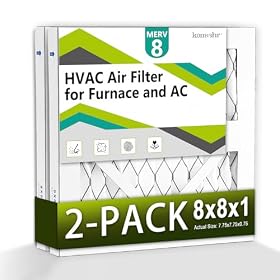
MERV 8: Often suitable for ordinary household dust and basic furnace protection.
MERV 11: A useful step up when the garage introduces more fine dust, provided the system supports it.
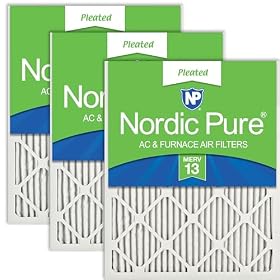
MERV 13: Better particle filtration, but not a default choice for every residential furnace. Use it only when the equipment and filter housing can maintain adequate airflow.
The filter’s thickness matters too. A deeper filter can sometimes provide more media area and longer service intervals than a thin filter with the same MERV rating, but only if the furnace has the matching housing.
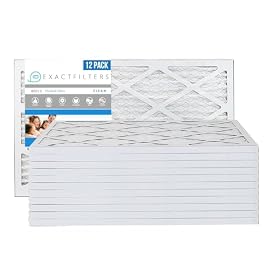
Exact-size pleated filter for dusty garage furnace
Product prices and availability are accurate as of the date/time indicated and are subject to change. Any price and availability information displayed on Amazon.com at the time of purchase will apply to the purchase of this product.
Features that matter in a dusty garage
Pleated filter media
A pleated filter generally provides more surface area than a flat panel filter of the same face size. That can improve dust capture, although it still needs to be replaced before it becomes heavily loaded.
A rigid, well-sealed frame
The frame should remain straight in the slot and make reasonable contact with the filter rack or grille. Gaps around the edges allow unfiltered air to pass through. If the rack is damaged or too loose, replacing the filter alone may not solve the problem.
Correct airflow direction
Look for the arrow printed on the filter frame. It should point toward the furnace or air handler, in the direction air travels through the return duct. Installing a filter backward can reduce its intended performance and may cause the filter to deform.
Product prices and availability are accurate as of the date/time indicated and are subject to change. Any price and availability information displayed on Amazon.com at the time of purchase will apply to the purchase of this product.
How often should you replace it?
A dusty garage can load a filter much faster than a clean living area. Inspect it after the first week or two with a new filter, then establish a replacement schedule based on its condition and the amount of dust in the space.
Replace it sooner if:
The filter surface is visibly coated or packed with dust.
Airflow from the supply registers has noticeably decreased.
The filter is bowed, damp, damaged, or being pulled out of shape.
The furnace begins cycling unusually or the system displays an airflow-related fault.
Do not wait for a calendar interval if the filter is visibly loaded. A clogged filter can reduce airflow, raise operating strain, and contribute to overheating or comfort problems.
Product prices and availability are accurate as of the date/time indicated and are subject to change. Any price and availability information displayed on Amazon.com at the time of purchase will apply to the purchase of this product.
Reduce the dust reaching the furnace
A filter is not a substitute for dust control. Keep sawdust, drywall dust, concrete dust, and similar debris away from the furnace return. Use source capture or a properly rated dust collector for dusty work, and avoid sweeping fine dust into the air near the return grille.
If the furnace is in the same space as woodworking, sanding, vehicle work, or other dust-producing activity, consider whether the return grille is drawing contaminated air directly toward the equipment. A qualified HVAC professional can assess return-air placement and filtration without compromising required combustion air or equipment clearances.
Never use a furnace filter to address gasoline vapors, solvent fumes, carbon monoxide, or other combustible or toxic vapors. Follow the furnace installation instructions and local safety requirements for garage-mounted fuel-burning equipment. If you suspect exhaust or combustion problems, shut down the equipment as appropriate and contact a qualified professional.
Product prices and availability are accurate as of the date/time indicated and are subject to change. Any price and availability information displayed on Amazon.com at the time of purchase will apply to the purchase of this product.
Installation checklist
Turn the furnace off if the manufacturer recommends doing so for filter replacement.
Remove the old filter without shaking accumulated dust into the return duct.
Confirm the replacement’s nominal size and thickness.
Point the airflow arrow toward the furnace.
Make sure the filter sits flat and is not crushed or bowed.
Close the access panel or grille securely.
Check that the return opening is not blocked by storage, tools, or debris.
Listen for unusual whistling and check supply airflow after the furnace runs.
When a different filter setup is the better choice
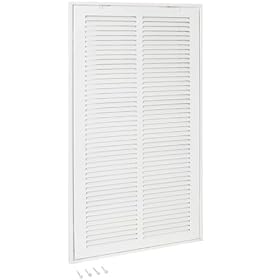
If a 1-inch filter becomes dirty very quickly, repeatedly causes weak airflow, or requires an unusually high MERV rating for your air-quality needs, the limitation may be the filter housing rather than the filter itself. A deeper media cabinet or a properly sized filter grille can provide more media area, but changing the housing or return duct should be planned with an HVAC professional.
Replace the filter rack or grille if it is warped, unable to hold the filter securely, or allowing substantial air to bypass the filter. Replace the furnace or air handler only when the equipment has a separate mechanical problem, is unsafe, or cannot provide the required airflow with a properly sized and maintained filter.
For a dusty garage, the safest purchase decision is usually: match the exact size and depth, choose a pleated filter within the equipment’s approved MERV range, inspect it frequently, and improve dust control at the source.
FAQ
What MERV rating is best for a furnace in a dusty garage?
Start with the furnace manufacturer’s approved range. MERV 8 or MERV 11 may be suitable for many systems, while MERV 13 should be used only when the furnace, filter rack, and duct system can maintain adequate airflow.
Can I use a thicker furnace filter to catch more garage dust?
Only if the furnace has a filter housing designed for that thickness. A thicker filter installed in a shallow slot may not fit correctly, can restrict airflow, or can prevent the access panel from closing.
How do I know which way a furnace filter goes?
Follow the arrow printed on the filter. It should point toward the furnace or air handler, in the direction of airflow through the return duct.
How often should I change a furnace filter in a dusty garage?
Inspect it frequently after installation and replace it when the media is visibly loaded, airflow drops, or the filter becomes damaged. Dust-producing work may require replacement much sooner than a normal household schedule.
Will a furnace filter remove gasoline fumes or carbon monoxide?
No. Standard furnace filters are intended for airborne particles, not gasoline vapors, solvent fumes, or carbon monoxide. Follow garage furnace safety requirements and have suspected combustion or exhaust problems checked by a qualified professional.