A furnace filter that clogs after only a month may be catching an unusual amount of dust—or restricting airflow because of the wrong filter, poor fit, or an overly dense MERV rating. Use this check order to find the cause safely.
What do you need help with?
Open an answer, or tell us what we should cover next.
Answered in this guide
Choose a furnace filter that balances clean air and airflow
A higher MERV rating captures smaller particles but can increase airflow resistance. Compare MERV rating, thickness, condition, and furnace capacity instead of assuming the highest rating is always best.
Check whether unusual dust from construction, remodeling, moving, or major cleaning is loading the filter faster than normal before assuming the furnace or filter is faulty.
Check that the filter fits and faces the right way
Verify the filter size, fit, and airflow direction. The arrow should generally point toward the furnace or air handler, and the filter should not leave gaps or sit incorrectly.
Find air leaks that are loading the filter with dust
Inspect around the filter cabinet and return duct for air being pulled from an attic, crawlspace, wall cavity, or unfinished basement instead of through the intended return path.
Know when a fast-clogging filter needs HVAC service
Call an HVAC professional if a new filter becomes heavily loaded again quickly, especially after checking its size, airflow direction, fit, and the return-air path.
Request a topic and help us choose what to build next.
Clean dusty return grilles and blocked airflow paths
Fix a filter that collapses or gets damaged in its slot
Requests help us prioritize the next guide. No email required.
One anonymous request per topic.
A furnace filter clogged after a month is usually caused by unusually high dust, a filter that is too restrictive for the system, air leaking around the filter, or a problem elsewhere in the ductwork or HVAC equipment. Replace a visibly loaded filter first, then check the cause before simply buying more filters. A dirty filter can reduce airflow, increase heating costs, and cause the furnace to overheat or shut down.
1. Confirm that the filter is actually clogged
Turn off the furnace or air handler before removing the filter. Hold it near a bright light and inspect the pleats. A light gray coating can be normal, but thick dust packed into the pleats, visibly collapsed media, or a filter that is difficult to see through indicates significant loading.
Also look for these symptoms:
Weak airflow from several supply vents
Longer heating cycles or frequent cycling
More dust around the home
A whistling sound at the filter slot
A furnace that shuts off before the home reaches the thermostat setting
Do not continue running the system with a heavily blocked filter. Follow the furnace manufacturer’s instructions, and have an HVAC professional inspect the system if it overheats, repeatedly shuts down, or produces unusual electrical or burning odors.
2. Check for heavy dust and unusual household conditions
A filter can load quickly when the home has more airborne particles than usual. Common causes include:
Construction, remodeling, sanding, or drywall work
A recent move or major cleaning project
Open windows during dusty or smoky conditions
Shedding pets
Candles, fireplaces, or smoking
Excessive dust from an unfinished basement, crawlspace, or attic
A recently installed carpet or flooring material
If construction dust is present, keep it away from the HVAC return whenever possible. Use appropriate dust control, close off work areas, and follow the equipment manufacturer’s guidance. A standard residential furnace filter is not a substitute for construction dust protection.
Check the area around return grilles, too. Dust, pet hair, and lint can be pulled directly into a nearby return and load the filter quickly.
Product prices and availability are accurate as of the date/time indicated and are subject to change. Any price and availability information displayed on Amazon.com at the time of purchase will apply to the purchase of this product.
3. Inspect the filter and its fit
Make sure the filter is installed in the correct airflow direction. Most filters have an arrow showing airflow; the arrow generally points toward the furnace or air handler. A reversed filter may not seal or perform as intended.
Check the following:
The filter’s size matches the size printed on the old filter or filter cabinet
The filter is not bent, crushed, or installed at an angle
The filter slides fully into its track
The access door closes securely
There are no large gaps around the frame
A filter that is too small can allow unfiltered air to bypass it. A filter that is too large may buckle or prevent the access panel from closing. Use the actual filter dimensions and the system’s specified size rather than relying only on a nominal label such as 16 by 25 inches.
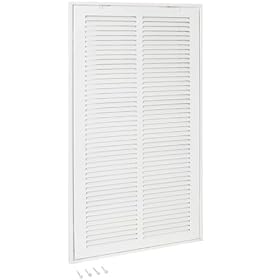
If the filter slot is damaged or loose, the correct replacement filter may not solve the problem. A filter grille, retaining clip, or cabinet repair may be needed.
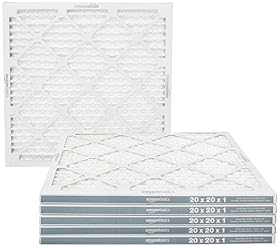
Higher-efficiency replacement filter, if system-compatible
Product prices and availability are accurate as of the date/time indicated and are subject to change. Any price and availability information displayed on Amazon.com at the time of purchase will apply to the purchase of this product.
4. Consider whether the filter is too restrictive
Filters with higher MERV ratings capture smaller particles, but they can also create more resistance to airflow. The effect depends on the filter’s actual design, thickness, condition, and the furnace or air handler’s capacity. A high-MERV filter is not automatically appropriate for every system.
This is especially important with thin 1-inch filters. A high-efficiency 1-inch filter may become restrictive more quickly than a deeper filter designed for the same system. Do not upgrade to a higher MERV rating solely to extend the replacement interval; denser filtration can make airflow problems worse.
Check the furnace or air-handler manual for the approved filter type and maximum pressure-drop guidance. If the system has an unusually high-efficiency filter, weak airflow, or frequent limit-switch shutdowns, ask a qualified HVAC professional to measure airflow and static pressure before changing filtration.
A deeper media cabinet may support effective filtration with less resistance, but installing one is an HVAC modification and should be sized for the equipment rather than added casually.
Product prices and availability are accurate as of the date/time indicated and are subject to change. Any price and availability information displayed on Amazon.com at the time of purchase will apply to the purchase of this product.
5. Look for air leaks around the filter and return duct
Dust should normally reach the filter through the return grille or filter cabinet. If air is pulled from an attic, crawlspace, wall cavity, or unfinished basement around the filter, the filter may become dirty unusually fast and the home may continue to collect dust.
With the system off, inspect accessible joints around the return duct and filter housing. Look for visible gaps, loose panels, missing insulation, or a filter that does not seal against its frame. Do not block designed combustion-air openings or seal anything you cannot identify confidently.
Duct sealing near the return side is best handled with appropriate HVAC materials and, when access is difficult, by a qualified professional. Ordinary household tape is not a durable substitute for proper duct sealing.
6. Check the return grille and airflow path
A blocked return grille can make the system work harder and reduce airflow. Make sure furniture, rugs, curtains, storage items, and pet beds are not covering return openings.
Clean a dusty return grille according to the manufacturer’s instructions. If the grille has a separate filter, verify that there is not also a second filter at the furnace unless the system is specifically designed for both. Two filters in series can create unnecessary airflow resistance.
If some rooms have very weak airflow while others are normal, the issue may involve ductwork, dampers, closed registers, or balancing rather than the furnace filter alone.
7. Check the full drum, bag, or cabinet conditions
For systems that use a larger media cabinet, inspect whether the filter is installed in the correct location and whether an old filter was left in place. Some homes have more than one return filter or more than one air-handling unit.
A filter that becomes dirty across only one section may indicate bypass air or a leak. A filter that is uniformly packed with dust may point more toward high particle levels, excessive runtime, or a filter that is too small for the airflow demand.
If your HVAC system includes a humidifier, electronic air cleaner, UV device, or other accessory, check its maintenance requirements separately. These components can affect airflow or add their own filters.
8. Consider furnace runtime and moisture
A filter may become dirty in a month because the furnace or blower has run far more than usual. Cold weather, an unusually low thermostat setting, open doors or windows, poor insulation, and thermostat problems can all increase runtime.
High indoor humidity can also make dust adhere to filter media more readily. Check for condensation, water leaks, or a humidifier that is not operating correctly. Turn off power before servicing equipment, and do not open sealed electrical compartments unless you are qualified to do so.
When should you replace the filter again?
Replace a filter when it is visibly loaded, airflow is reduced, or the manufacturer’s instructions call for replacement—not simply because a particular number of weeks has passed. After replacing it, write the installation date on the frame and inspect it periodically. The next interval may be longer or shorter depending on pets, dust, filter thickness, MERV rating, home size, and furnace runtime.
Use the filter size and type approved for your system. If you are considering a higher MERV filter, confirm compatibility first. A filter that captures more particles but causes insufficient airflow is not a good tradeoff for the furnace.
When to call an HVAC professional
Arrange service if the new filter becomes heavily loaded again within a short time, especially after you have checked the size, direction, return grilles, and visible duct leaks. Professional diagnosis may include checking:
Static pressure and airflow
Blower operation and speed settings
Return-duct sizing and leakage
Evaporator-coil or heat-exchanger condition
Limit-switch operation
Filter-cabinet design and bypass air
Stop using the furnace and seek qualified help for repeated overheating shutdowns, a strong burning or electrical smell, unusual motor noise, visible damage, or carbon-monoxide concerns. Keep working furnace repairs and electrical diagnosis to a qualified professional unless the manufacturer specifically identifies a safe homeowner procedure.
FAQ
Is it normal for a furnace filter to get dirty in one month?
It can be normal during construction, heavy shedding, smoky conditions, or unusually high furnace runtime, but a heavily clogged filter every month deserves investigation. Check the filter fit, airflow direction, return grilles, duct leaks, and MERV rating.
Does a higher MERV filter clog faster?
It can, particularly when a thin filter is used in a system that cannot handle its airflow resistance. Higher MERV filtration is not automatically better for every furnace. Follow the equipment manufacturer’s guidance and consider professional airflow or static-pressure measurement if airflow is weak.
Why is only part of my furnace filter dirty?
Uneven loading can indicate air bypass around the frame, a poor seal, a damaged filter cabinet, or a return-duct leak. Check that the filter is the correct size, fully seated, and pointing in the correct airflow direction.
Can a dirty furnace filter cause the furnace to shut off?
Yes. Severe airflow restriction can cause the furnace to overheat and activate a safety limit, leading to short cycling or shutdown. Replace the filter, but have the system inspected if shutdowns continue or if there is an unusual odor or noise.
Should I use two furnace filters for better filtration?
Not unless the HVAC system was designed for them. Two filters in series can add airflow resistance and may cause performance problems. Check the system instructions or ask an HVAC professional before adding another filter.